How to Choose Your First Ukulele
Soprano, concert, tenor or baritone? Our Footscray team explains ukulele sizes, woods, school requirements, tuning and what a first uke honestly needs to cost.
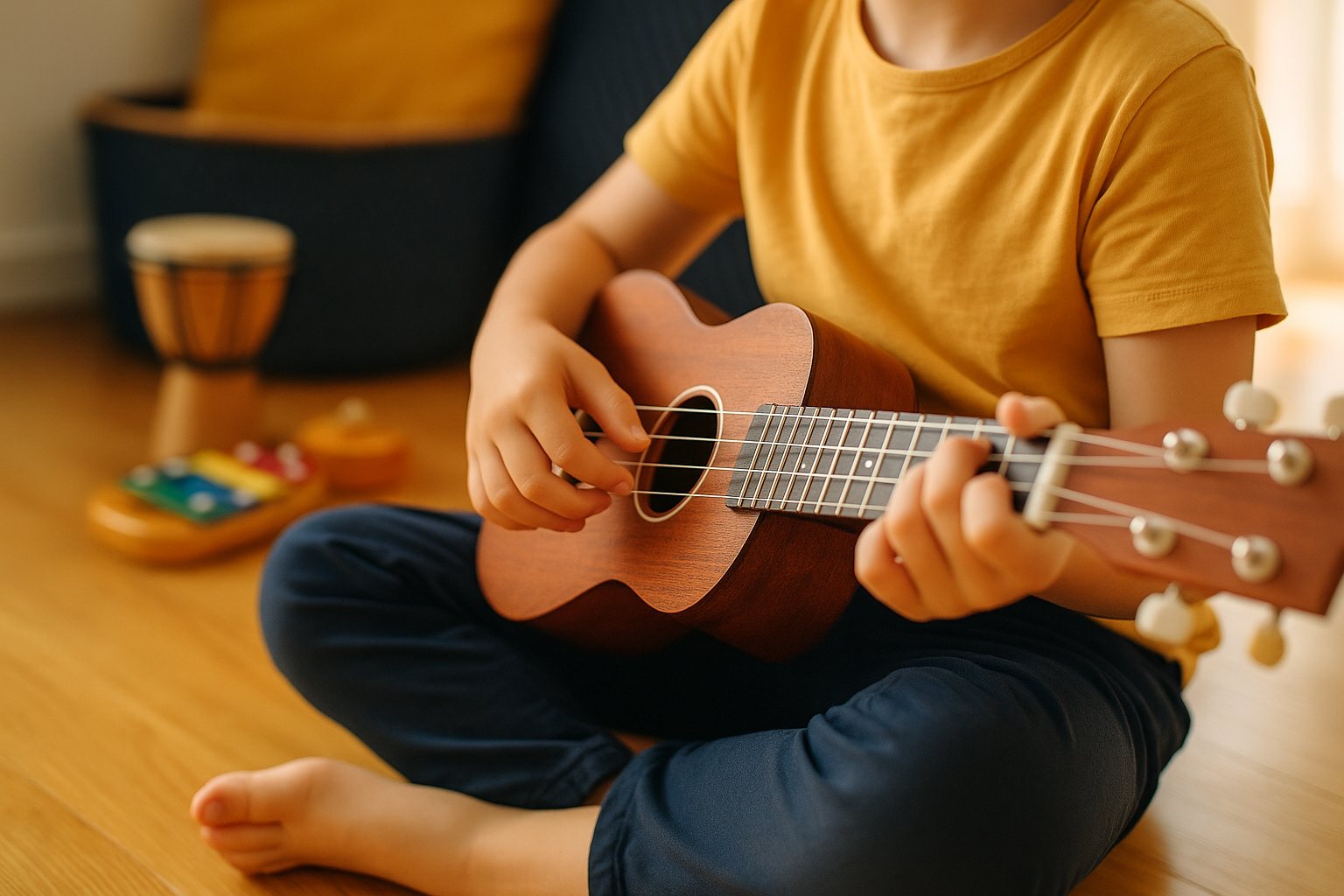
Walk past any primary school in Melbourne's west and you'll hear them: ukuleles are the first instrument for thousands of kids, and one of the friendliest starting points for adults too. They're affordable, kind to fingertips and genuinely fun within the first week.
The catch is that ukes that look identical online can play completely differently. We've been selling ukuleles in Footscray since 1997, and this guide is what we tell parents, beginners and curious guitarists across the counter every week — sizes, woods, school requirements and what's honestly worth spending.
Pick the size first
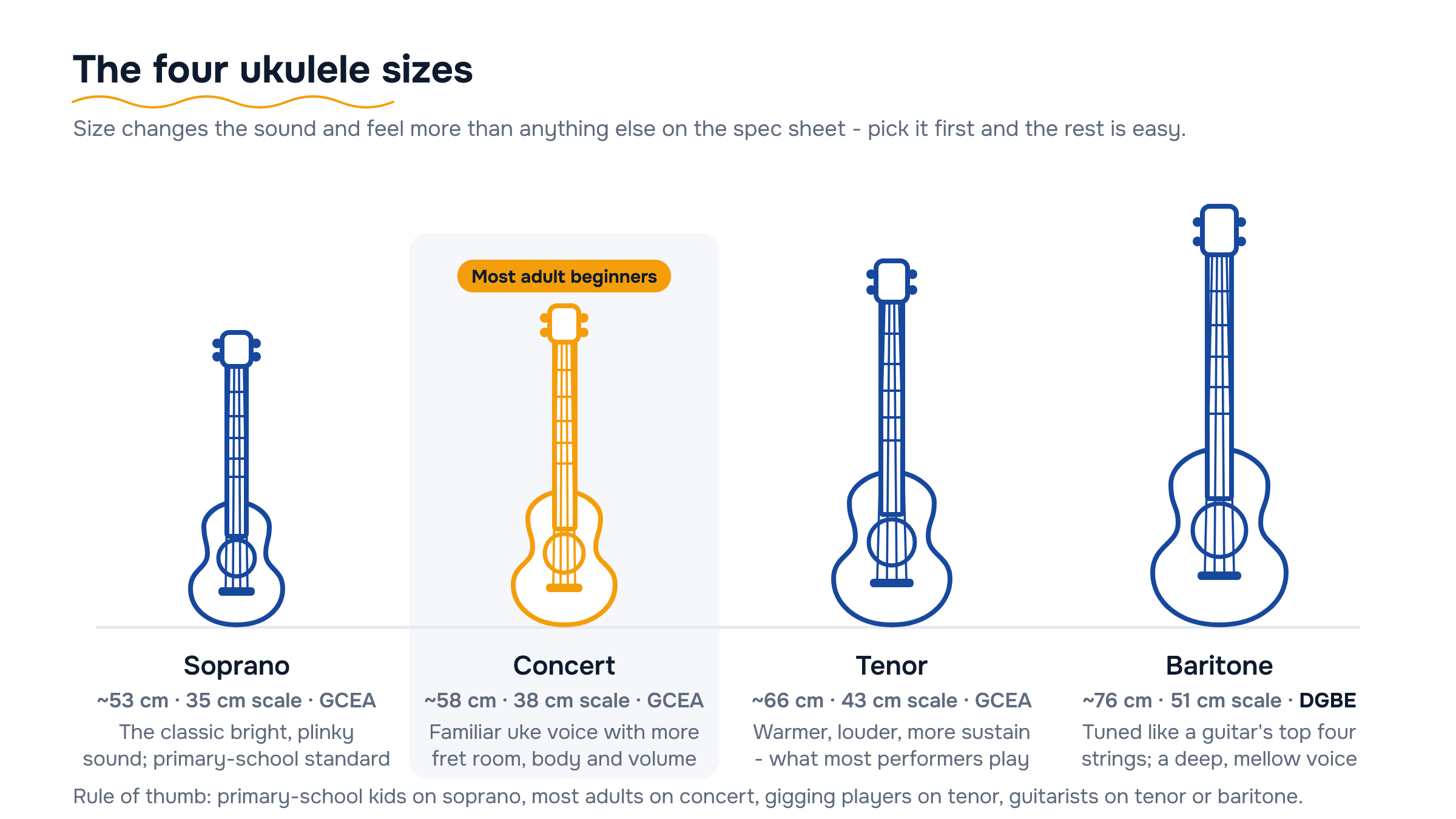
Ukuleles come in four main sizes, and size changes the sound and feel more than anything else on the spec sheet. Get this right first and the rest is easy.
- Soprano (about 53 cm long, 35 cm scale) is the classic bright, plinky uke sound and the standard size for primary school programs. The fret spacing is tight, so adult hands can feel cramped past the first few chords.
- Concert (about 58 cm, 38 cm scale) keeps that familiar uke voice but adds fret room and a little more body and volume. For most adult beginners, concert is the right call.
- Tenor (about 66 cm, 43 cm scale) is warmer, louder and has more sustain. It's what most performers play, and the extra neck room suits guitarists and bigger hands. Still tuned GCEA like the smaller two.
- Baritone (about 76 cm, 51 cm scale) is the odd one out: it's tuned DGBE like the top four strings of a guitar, with a deep, mellow voice closer to a small classical guitar than a uke.
Quick rule of thumb: primary-school kids on soprano, most adults on concert, bigger hands and gigging players on tenor, guitarists on tenor or baritone. You can browse every size in our ukulele range.
Woods and build: laminate is fine, honestly
Under $300, how well a uke is built and set up matters far more than what it's built from — so don't lose sleep over timber on a first instrument. That said, the labels are worth understanding.
Laminate ukes are made from layered timber. They're sturdy, handle Melbourne's temperature and humidity swings without complaint, and survive school-bag life. Solid-top ukes pair a solid timber soundboard with laminate back and sides — these start appearing around the $250-$300 mark, and the extra volume and character is real. All-solid ukes sound the most alive and improve as they're played in, but they cost more and appreciate a little care.
As for the timbers themselves: mahogany and sapele are warm and even — the safe, classic uke voice. Koa, the traditional Hawaiian timber, is sweet and chimey with beautiful grain, and commands a premium. A spruce top gives a louder, punchier attack that suits strummers backing singers.
Our honest take: a well-made laminate uke beats a cheaply made solid one every time. Buy the better-built instrument, not the better-sounding spec sheet.
Why a cheap-but-proper uke beats a toy
The single biggest trap in ukulele buying is the $40 toy-shop uke. In a photo it looks identical to a real beginner instrument. In the hands, it's the reason so many kids decide they "can't play".
- Friction pegs slip. Toys use push-in pegs that drift out of tune mid-song. A proper beginner uke has geared tuners that hold pitch for days.
- The action is too high. When strings sit too far off the fretboard, chords hurt small fingers and notes bend sharp — so even correct playing sounds wrong.
- The intonation is out. If the bridge or frets are misplaced, the uke is out of tune with itself, and no amount of tuning fixes that.
- Rough fret ends scratch little hands as they slide along the neck.
Here's the good news: a genuine entry-level ukulele from a music store costs under $100 — often barely more than the toy — and gets all of this right. Add a clip-on tuner and you've got an instrument a beginner can actually succeed on. That gap between "toy" and "cheap but proper" is the most important dollar-for-dollar decision in this whole guide.
Buying for a school program
If a school note has landed in your inbox, here's the short version: most primary programs use soprano ukuleles tuned GCEA, with some preferring concert for bigger kids in years 5 and 6. Read the note first — teachers sometimes specify a size or colour, and it's easier to match the class than to be the odd one out.
The full school kit looks like this:
- A soprano or concert uke with geared tuners — see the toy warning above
- A padded gig bag from our cases and bags range, because it's travelling in a school bag
- A clip-on tuner — some classes tune together, but home practice needs one
- The class method book if the school uses one — our ukulele books section covers the common ones, including the Hal Leonard methods
On logistics: Click & Collect from the Footscray showroom is the fastest option in the back-to-school rush, weekday orders before 2pm AEST ship same day, and shipping is free Australia-wide over $150 — which two siblings' ukes plus accessories will usually clear.
Tuning basics and the fluorocarbon upgrade
Soprano, concert and tenor ukuleles all share the same tuning: G-C-E-A. The quirk is the G string — it's tuned high, sitting above the C next to it. This "re-entrant" tuning is exactly what gives the uke its bouncy, close-voiced strum, so don't let it confuse you on day one.
Baritone is different: D-G-B-E, matching the top four strings of a guitar. It sounds gorgeous, but classroom chord charts and most beginner uke books assume GCEA — another reason baritone is the wrong pick for school.
Two string tips from the counter:
- New strings stretch. Nylon and fluorocarbon strings take a week or two to settle, so expect to retune every single time you play at first. It's not a fault — every uke does it.
- Fluorocarbon is the cheap upgrade. Most entry ukes ship with basic nylon. A fluorocarbon set — D'Addario make excellent ones — is brighter, better balanced string-to-string and more tuning-stable, for under $30. You'll find them in our ukulele strings range, and fitting them yourself is a 15-minute job.
Coming from guitar? Read this bit
If you already play guitar, the uke is the easiest second instrument going — four strings, soft nylon tension, and chord shapes you mostly already know.
Baritone means zero relearning: DGBE is your top four strings, so every chord grip transfers as-is. Tenor gives you the true ukulele voice with the roomiest neck — GCEA is effectively your top four strings capoed at the fifth fret, so the shapes are familiar even though the chord names shift. Add a low-G string to a tenor and you get a more guitar-like range for fingerstyle.
For travel, even a tenor fits in an overhead locker with room to spare, and laminate builds shrug off climate changes that would bother a solid-timber guitar. If you want to plug in at a gig, acoustic-electric ukes are common from the mid price range up, and there are dedicated ukulele amps voiced for their sweeter top end.
And if the uke turns out to be the gateway back to a bigger instrument — it happens a lot — our acoustic guitar buying guide picks up where this one ends.
Still not sure which size suits your hands? Call us on 03 4151 5751 or drop into 284-288 Ballarat Rd, Footscray — five minutes playing a soprano, concert and tenor side by side settles it faster than any guide.
What your budget gets you
Under $100
A first uke for a school kid, or a low-stakes way to find out if the uke bug bites.
A laminate soprano or concert with geared tuners — that last part is non-negotiable. Buy it from a music store rather than the toy aisle and it will hold tune and play in tune.
Shop Ukulele under $100 →$100-$300
The sweet spot for most adult beginners and committed kids.
A better-built laminate or a solid-top concert or tenor, smoother tuners, and often a gig bag included. This is where ukes start sounding like the records.
Shop Ukulele $100–$300 →$300-$700
Committed players, performers, and anyone shopping for their forever-first uke.
Solid tops and all-solid builds, with acoustic-electric options for plugging in. Afterpay and Zip can split it into four interest-free instalments if that helps.
Shop Ukulele $300–$700 →$700+
Players who know they're keeping this one for decades.
All-solid koa and mahogany instruments that open up the more they're played. As an authorised Australian dealer, everything carries a full manufacturer warranty — no grey imports.
Shop Ukulele from $700 →Compare at a glance
| Type | Best for | Watch out for | Typical spend |
|---|---|---|---|
| Soprano | Primary school programs and the classic bright uke sound | Tight fret spacing cramps adult hands; toy versions are everywhere | Under $250 |
| Concert | Most adult beginners — familiar uke voice with more fret room | Costs a little more than a soprano of the same build quality | $100-$400 |
| Tenor | Bigger hands, guitarists and performers wanting volume and sustain | Slightly higher string tension; less of the toy-box plink | $150-$700+ |
| Baritone | Guitarists — DGBE tuning matches the guitar's top four strings | Doesn't match GCEA school books or classroom chord charts | $200-$700 |
| Banjolele | Uke players chasing vintage music-hall twang | Heavier than a uke, and much louder than the family expects | $200-$500 |
Common mistakes to avoid
- Buying from the toy aisle Friction pegs slip, the action is high and the intonation is out — a uke that can't be played in tune teaches a kid to quit. Spend the same money at a music store instead.
- Defaulting to soprano because it's "the ukulele size" Most adults are happier on a concert or tenor. If your hands feel cramped on a soprano, that's not you — it's the fret spacing.
- Buying a baritone for a school program Baritone is tuned DGBE, so none of the classroom GCEA chord shapes or books will match. Lovely instrument, wrong tool for the class.
- Blaming the uke for the first fortnight New nylon and fluorocarbon strings stretch for a week or two and need constant retuning. That's normal — it settles.
- Skipping the tuner and bag A clip-on tuner is the difference between practising and giving up, and a padded bag is cheap insurance for an instrument that lives in a school bag.
Your questions, answered
What size ukulele does my child need for school?
Most primary school programs use soprano, with some preferring concert for older kids in years 5 and 6. Check the note from the music teacher first, as some schools specify a size. If there's no note, a soprano with geared tuners is the safe default for under-10s.
Should an adult beginner get a soprano or a concert?
Concert, for most people. You keep the classic uke sound but get noticeably more fret room and a slightly fuller voice. If you have large hands or already play guitar, go tenor.
How is a ukulele tuned?
Soprano, concert and tenor ukes are tuned G-C-E-A, with the G tuned high (re-entrant) — that's what gives the uke its bouncy sound. Baritone is the exception: it's tuned D-G-B-E, like the top four strings of a guitar. A clip-on tuner makes daily tuning a ten-second job.
Why won't my new ukulele stay in tune?
Almost always it's the strings, not the uke. New nylon and fluorocarbon strings stretch for the first week or two and need retuning every time you pick the instrument up. If it's still drifting after that — or the uke has friction pegs that slip — give us a call on 03 4151 5751.
Are fluorocarbon strings worth it?
Yes — it's the best cheap upgrade you can make. Fluorocarbon strings are brighter, more consistent from string to string and hold their tuning better than the basic nylon fitted to most entry-level ukes. A set is under $30 and noticeably lifts a budget instrument.
I play guitar — which ukulele should I get?
Baritone if you want zero relearning: it's tuned like your top four strings, so every chord shape transfers directly. Tenor if you want the true ukulele sound with the most comfortable neck — GCEA works like your top four strings capoed at the fifth fret, so the shapes are familiar, just renamed.
Can I try ukuleles in store before buying?
Absolutely — that's the best way to choose a size. Drop into the showroom at 284-288 Ballarat Rd, Footscray and play a soprano, concert and tenor back to back, or call 03 4151 5751 and a real player will talk you through it. Online orders are covered by 30-day returns if the size isn't right.
Shop the categories in this guide
Keep reading: Acoustic Guitars · School Band Instruments · Violins & Strings
Try our in-store range in Footscray
Come and play what we’ve got on the floor side by side — real players on hand, honest advice, and genuine authorised Australian stock with full manufacturer warranty. Call ahead and we’ll check what’s in store for you to try.
Talk to our experts — in-store or on the phone
Still torn between two? Our team are real players who know this gear inside out. Call us, message us, or drop in and play what we’ve got in store. Reserve online for Click & Collect — we’ll confirm it’s ready before you come in — genuine stock, full manufacturer warranty, and your Consumer Law rights always apply.
Visit the Footscray showroom
Why you can trust this advice
Written & reviewed by
The Scarlett Music Team
Footscray showroom & workshop · Independent dealer since 1997
This guide is written by the same team that sells, demos and plays this gear six days a week — so our picks come from hands-on experience with the actual instruments, not a spec sheet. We only recommend genuine, authorised Australian stock, and pricing and availability are reviewed and updated regularly.





Leave a comment