School Band Instruments: A Parent's Survival Guide
Your kid just joined the school band and you're holding a list of strange words. Flute, clarinet, sax, trumpet and trombone explained, plus rent-vs-buy and the gear that matters.
Your child has come home with a note saying they're in the school band, and a list of things to buy that may as well be in another language. Mouthpiece, ligature, swab, B-flat, intermediate model — none of it means anything yet, and you just want to know what to get so the term can start.
This guide is written by the brass and woodwind players on our Footscray floor who sell and fit this gear every week, and who fielded the same questions from our own families. We'll walk you through the five starter instruments, the honest truth about renting versus buying in the first year, what the school list really means, and the few accessories that genuinely matter. By the end you'll know exactly what to put in the cart.
The five starter instruments and what each asks of a kid
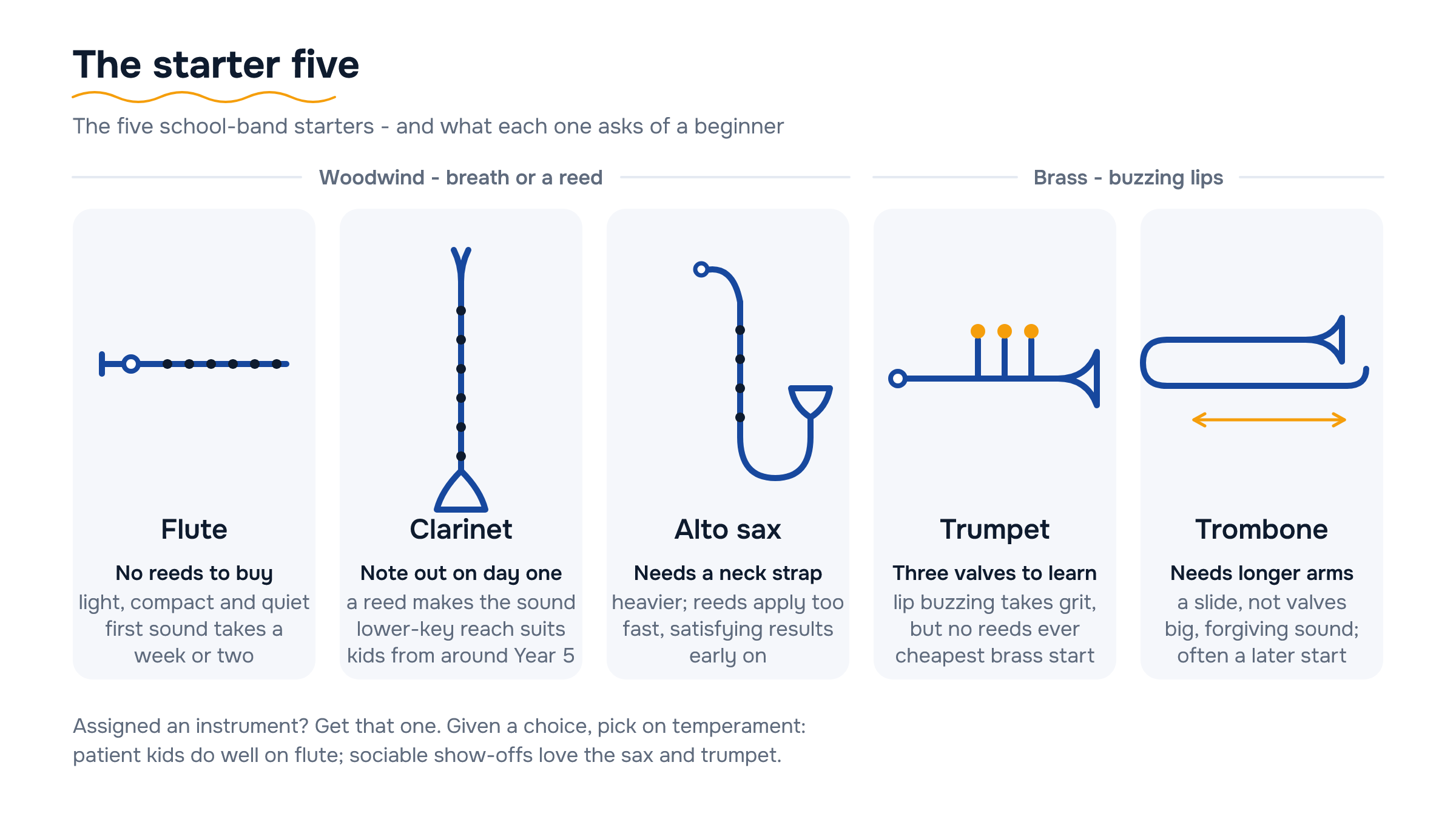
School concert bands are built from the same handful of instruments year after year, because they balance well together and there's a method book for every one. Here's what each one demands of a beginner, in plain terms.
- Flute: light, compact and quiet to practise. The catch is the very start — blowing across the hole to get any sound at all takes a week or two of patience. No reeds to buy, which keeps running costs down. A great fit for smaller kids and anyone who finds a mouthpiece awkward. Browse the flute range to see what a student model looks like.
- Clarinet: the most common starter of the lot. A reed makes the sound, so there's a small ongoing cost and a bit of fuss, but a beginner gets a note out on day one. The reach to the lower keys suits most kids from around Year 5. See the clarinet range.
- Alto saxophone: hugely popular and genuinely satisfying early on — kids sound like a sax fast. It's heavier, so it comes with a neck strap, and reeds apply here too. The starter sax is always the alto, not the bigger tenor. See saxophone.
- Trumpet: small, robust and the cheapest brass to get into. Sound comes from buzzing the lips into the mouthpiece, which takes some early grit but no reeds ever. Three valves to learn. See trumpet.
- Trombone: a slide instead of valves, so it needs longer arms — many schools wait until a child is a bit taller. Big, fun, forgiving sound. See trombone.
If your child's been assigned an instrument, get that one. If they've been given a choice, pick on temperament: patient kids do well on flute, sociable show-offs love the sax and trumpet, and a child who already plays piano will read music faster on anything.
Rent or buy in the first year? The honest answer
This is the question every band parent asks, so here's the straight version. In the first year, neither choice is wrong — it comes down to how sure you are that your child will stick with it.
Renting keeps your downside small. If the band thing fizzles out by the spring concert — and for some kids it does — you hand the instrument back and you're done, rather than owning gear you now have to sell. It also gets a properly set-up, working instrument into their hands without a big outlay. The trade-off is that a year or two of rent often adds up to more than a student instrument would have cost to buy outright.
Buying makes sense once you're fairly confident it'll stick — a sibling already plays, the child chose the instrument themselves, or they're simply keen. A decent student instrument holds its value reasonably and can be sold on or passed down if plans change.
Our practical rule: if you genuinely don't know whether it'll last the year, rent or buy the cheapest sound student model and reassess after the first couple of concerts. If the enthusiasm is already there, buy a good student instrument once and skip the rent. You'll see rent-from options listed on the relevant product pages — and the best thing to do is simply ask our team about rental for the specific instrument you need, because availability moves. Whatever you choose, buy from an authorised Australian dealer so it carries full manufacturer warranty — a cheap online import that can't be serviced or tuned is a false economy in a school band.
Student vs intermediate: what actually changes
You'll see instruments sold as student (or beginner), then intermediate, then professional. For a child starting out, you want a student model — full stop. But it helps to know what the next tier buys, so you know when (and whether) to upgrade later.
- Build and materials: intermediate flutes add a solid silver headjoint for a richer tone; intermediate clarinets often move from plastic (ABS resin) to grenadilla wood; intermediate brass gets better valves and bracing. Student instruments use tougher, lighter, more forgiving materials — which is exactly what you want a 10-year-old carrying to school on the tram.
- Extra keys and features: intermediate woodwinds add keys that extend the range and make advanced passages easier. A beginner won't use them for a year or two, so paying for them early is wasted money.
- Tuning and response: better instruments play more evenly in tune and respond faster. A beginner can't yet hear or use that difference — their progress comes from practice, not the instrument.
The honest guidance: a good student instrument will comfortably take a child through their first two or three years and most of the way through high school band. The right time to think about intermediate is when a committed player starts private lessons, joins a higher ensemble, or their teacher specifically recommends it — not before. When that day comes, our brass and woodwind range goes all the way up, and a price-match promise applies against other authorised Australian dealers.
Care basics: reeds, valve oil, swabs and the daily five minutes
A school instrument lives or dies by a few simple habits. Get these right and it'll play well all year; ignore them and you'll be back for repairs. The list splits cleanly by instrument family.
- Reeds (clarinet and sax): the thin sliver of cane that makes the sound. They wear out and chip, so you buy them in boxes and rotate through several. Beginners start on a soft strength — typically a 2 or 2.5 — and move up as the lip muscles develop. Always keep a spare or two in the case; a split reed mid-rehearsal is the classic band emergency. Grab a box from reeds.
- Valve oil (trumpet): a few drops a week keeps the valves moving freely. Sticky, un-oiled valves are the number-one reason a beginner trumpet 'stops working'. Trombone slides want slide cream or spray plus a little water instead.
- Swabs (all woodwind): a cloth on a string, pulled through the instrument after every play to remove moisture. Skipping this is what makes pads stick, smell and eventually need replacing. Thirty seconds, every time.
- Cork grease, cleaning cloths and a stand: cork grease helps the joints fit without forcing (forcing is how keys get bent), a cloth keeps fingerprints off, and a proper stand stops the most expensive accidents of all — instruments knocked off a chair.
You'll find all of it in care products, and protective cases and bags for the trip to school. Five minutes of care after each practice saves a $150 repair later.
Decoding the school list and the method books
That cryptic list from the music teacher is more predictable than it looks. Here's how to read the bits that trip parents up.
- The method book: nearly every concert band runs on a graded method series, and the two you'll see most are published by Alfred (Sound Innovations, Accent on Achievement) and Hal Leonard (Essential Elements, Standard of Excellence). The crucial detail: buy the book for your child's specific instrument. The flute book and the trumpet book share the same cover and page numbers so the class can play together, but the notes inside are different. We stock both publishers — match the title and the instrument exactly.
- 'B-flat clarinet', 'E-flat alto sax': these just confirm the standard school version of the instrument. A starter clarinet is a B-flat; a starter sax is an E-flat alto. You don't need to understand the theory — it's there so you buy the right one, which the student models in our range already are.
- Reeds with a strength number: 'clarinet reeds 2.5' means that strength. Start soft if unsure.
- A music folder and a pencil: genuinely on most lists, and genuinely needed at every rehearsal.
For the books, our woodwind and brass book sections carry the Alfred and Hal Leonard method series by instrument, and concert band covers the ensemble pieces a teacher might add. If the list still reads like code, that's the easiest thing to fix: bring it in to the Footscray showroom at 284-288 Ballarat Rd or call us on 03 4151 5751, and a player who's read a hundred of these will sort the whole lot for you in one go — and you can try the instrument on the floor before you commit.
What your budget gets you
Under $50
The accessories and books on the school list.
Method books, a box of reeds, valve oil, swabs, cork grease and a folder. Small things, but the ones a rehearsal actually can't run without — keep spare reeds on hand.
Shop Care Products under $50 →Under $300
First-time brass families, or anyone testing the waters.
Entry student trumpets and trombones, typically with a case and mouthpiece. The most affordable way into a band instrument — check it's a known student brand with warranty, not an unserviceable import.
Shop Brass Instruments under $300 →$300-$700
Most beginner woodwind families buying outright.
Solid student flutes, clarinets and alto saxes that will see a child through their first few years of band. This is the sweet spot for a buy-once student instrument.
Shop Woodwind Instruments $300–$700 →$1,000+
Committed players stepping up after a year or two.
Intermediate instruments — silver flute headjoints, wooden clarinets, better brass valves and extra keys. Worth it once lessons and a higher ensemble are in the picture, not before.
Shop Brass & Woodwind from $1,000 →Compare at a glance
| Type | Best for | Watch out for | Typical spend |
|---|---|---|---|
| Flute | Patient kids; smaller hands; no reed fuss | The first weeks of getting any sound at all | $300-$700 |
| Clarinet | The classic all-round starter; sound on day one | Reeds to buy and rotate; mind the lower-key reach | $300-$700 |
| Alto sax | Fast, satisfying results; keen, sociable kids | Heavier; needs a neck strap and reeds | $500-$1,000 |
| Trumpet | Cheapest brass start; small and tough | Early lip-buzzing takes grit; oil the valves weekly | Under $300-$500 |
| Trombone | Big forgiving sound; no reeds, no valves | Needs longer arms — often a later start | Under $300-$600 |
Common mistakes to avoid
- Buying the wrong method book The flute and trumpet books look identical but the notes inside differ by instrument. Buy the Alfred or Hal Leonard book that names your child's exact instrument, or they can't play along in class.
- Grabbing the cheapest unbranded instrument online A no-name import that can't be tuned, serviced or warrantied is a false economy — it frustrates the child and often can't be repaired. Buy a known student brand from an authorised dealer.
- Skipping the swab and valve oil Two minutes of after-play care prevents most beginner breakdowns. Stuck pads, sticky valves and bad smells are nearly always neglected maintenance, not faults.
- Forcing the joints together Without cork grease, pushing a clarinet or flute together bends keys and cracks corks. A smear of grease and a gentle twist is all it takes.
- Running with only one reed Reeds chip and split without warning, usually right before a rehearsal. Keep a couple of spares in the case at all times — it's the cheapest insurance in music.
Your questions, answered
My child was assigned an instrument — can they swap to a different one?
Ask the music teacher first, because bands are balanced and they may need that part filled. If a swap is fine, the early weeks are the easiest time to change. We're happy to talk through which instrument might suit your child better before you commit to buying.
Should we rent or buy for the first year?
If you're unsure it'll stick, renting keeps your downside small and gets a working instrument into their hands. If the enthusiasm is already there, buying a student model once is usually cheaper over a couple of years. Rent-from options appear on the product pages — just ask our team about rental for the instrument you need.
What's the difference between a student and an intermediate instrument?
Student models use tougher, lighter materials and keep things simple, which is exactly right for a beginner. Intermediate instruments add things like silver flute headjoints, wooden clarinet bodies and extra keys for tone and range. A good student instrument lasts most kids through their first few years — upgrade only when a committed player and their teacher call for it.
Which instrument is easiest for a young beginner?
Clarinet and trumpet both give a note fairly quickly, so they feel rewarding early. Flute is light and reed-free but takes a couple of weeks to get the first sound. The best instrument is usually the one your child is genuinely keen on, because that's the one they'll practise.
What reeds should I buy and how many?
Start on a soft strength, around a 2 or 2.5, for clarinet or alto sax, and move up later as the lip muscles develop. Buy a box rather than singles and rotate through several, keeping a couple of spares in the case. Reeds chip and split, so they're a normal ongoing cost — not a sign anything's wrong.
Do you stock the Alfred and Hal Leonard method books?
Yes, both — they're the two series most school bands use, and we carry them by individual instrument so you get the right notes for flute, clarinet, sax, trumpet or trombone. Bring your school list in or call us and we'll match every title for you in one go.
Can I just bring the school's list in and have you sort it?
Absolutely — it's one of the most common things we do. Bring the list to the Footscray showroom or call 03 4151 5751, and a brass or woodwind player will pull together the instrument, reeds, care kit and matching method book in one trip. Free shipping applies Australia-wide over $150, with Afterpay and Zip available.
Shop the categories in this guide
Keep reading: Violins & Orchestral Strings Buying Guide · Digital Pianos & Keyboards Buying Guide · Microphones Buying Guide
Try our in-store range in Footscray
Come and play what we’ve got on the floor side by side — real players on hand, honest advice, and genuine authorised Australian stock with full manufacturer warranty. Call ahead and we’ll check what’s in store for you to try.
Talk to our experts — in-store or on the phone
Still torn between two? Our team are real players who know this gear inside out. Call us, message us, or drop in and play what we’ve got in store. Reserve online for Click & Collect — we’ll confirm it’s ready before you come in — genuine stock, full manufacturer warranty, and your Consumer Law rights always apply.
Visit the Footscray showroom
Why you can trust this advice
Written & reviewed by
The Scarlett Music Team
Footscray showroom & workshop · Independent dealer since 1997
This guide is written by the same team that sells, demos and plays this gear six days a week — so our picks come from hands-on experience with the actual instruments, not a spec sheet. We only recommend genuine, authorised Australian stock, and pricing and availability are reviewed and updated regularly.





Leave a comment