
How to Choose a Microphone: Vocals, Streaming & Stage
Dynamic vs condenser, USB vs XLR, and the right mic for singing, podcasting, bands and schools - plain-English advice from the players on the Scarlett floor.

Picking a microphone gets confusing fast because the same word covers a $50 USB stick and a $2,000 studio classic. The good news is that for most people the right answer is narrower than it looks - it comes down to what you are recording, where, and how it plugs in. This guide walks you through the real decisions so you finish knowing exactly what to buy.
We have written it for singers, podcasters and streamers, gigging bands, and schools and churches running a PA. We sell and use this gear every week at our Footscray showroom, so the advice here is what we would actually tell you across the counter - no hype, no pressure.
Dynamic vs condenser: the first real decision
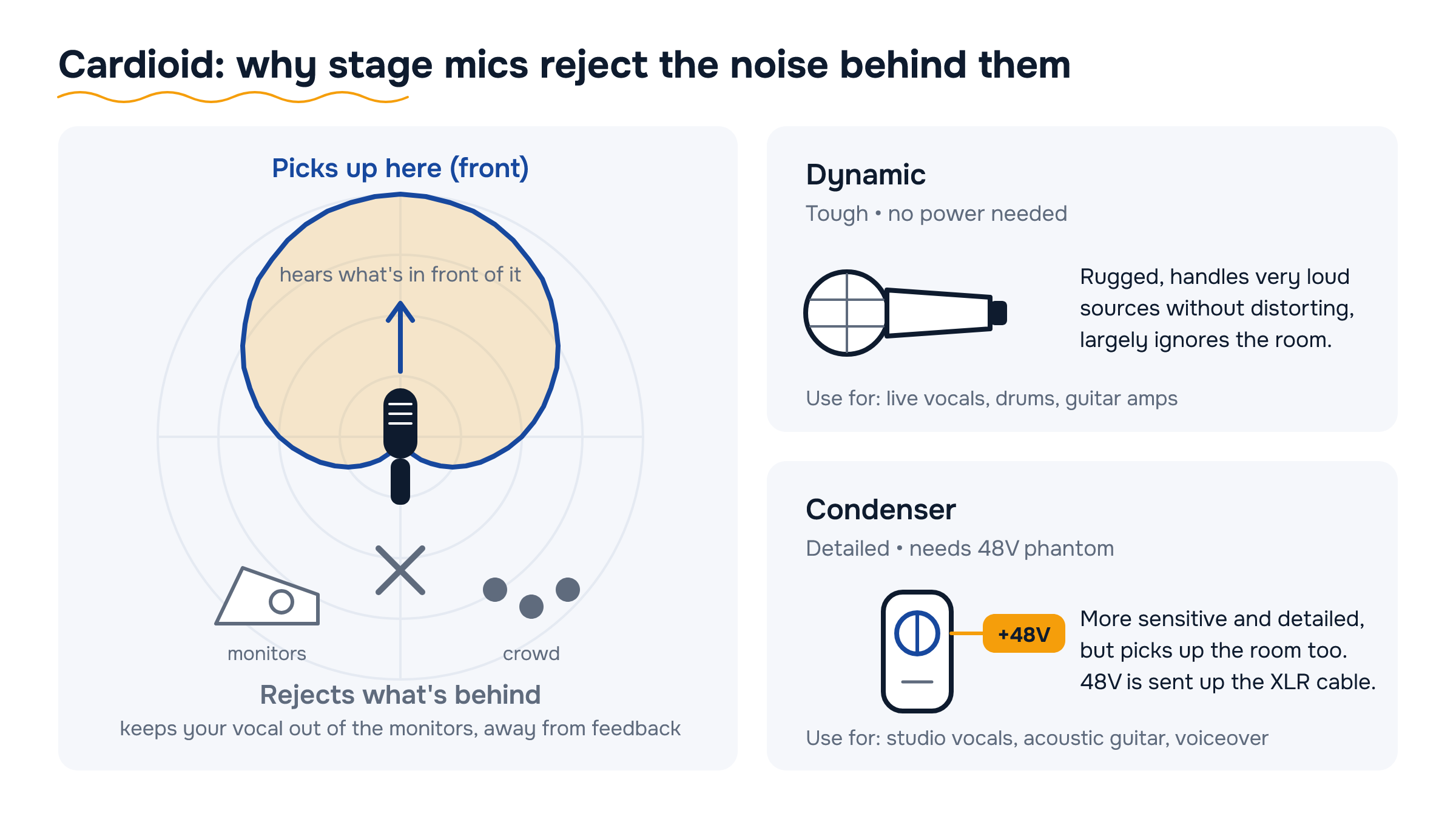
This is the choice that matters most, and it is simpler than the jargon makes it sound. A dynamic mic is rugged, handles very loud sources without distorting, and largely ignores the room around it. A condenser mic is more sensitive and detailed, but it also picks up the room, the fan, the keyboard clicks and the kid practising next door.
The plain-English rule we use:
- Dynamic - loud or live sources, untreated rooms, anywhere a bit of background noise is in play. Live vocals, drums, guitar amps, a podcast in an ordinary room, a noisy classroom.
- Condenser - quiet, detailed sources in a controlled space. Studio vocals, acoustic guitar, voiceover and serious recording in a treated room.
If you are not sure, a good dynamic is the more forgiving choice - it flatters a poor room and survives real-world handling. Browse both across our microphones range, or jump to the studio mics if you have a quiet, treated space.
USB vs XLR: how it plugs in (and what XLR needs)
A USB mic plugs straight into your computer and works in minutes - the converter is built in. It is the easiest path for a single podcaster, streamer or anyone recording one voice at a desk. The trade-off is that you are locked to that one mic and limited room to grow.
An XLR mic uses a 3-pin cable and needs something to plug into - that is the part people miss. For recording, that means an audio interface between the mic and your computer; for live use it is a mixer or powered speaker. XLR is the standard for a reason: you can swap mics, record several at once, and upgrade piece by piece.
One thing every condenser needs on XLR is phantom power - 48V sent up the cable from the interface or mixer (look for a +48V button). Dynamic mics do not need it, and switching it on with a dynamic plugged in does no harm. So an XLR condenser plus a two-input interface with phantom power is the classic small home-recording rig, and it leaves you a spare input for a guitar or a second voice down the track.
- One voice, want it simple - USB condenser, done.
- Want to grow, record instruments, or run a band - XLR mic plus an interface (and don't forget the cable).
Live vocals: the cardioid dynamic standard
For singing through a PA, there is a default that has held for decades: a handheld cardioid dynamic. Cardioid means the mic hears what is in front of it and rejects what is behind, which is exactly what keeps your vocal out of the monitors and away from feedback on a loud stage.
You will see the same shape recommended everywhere because it genuinely works - rugged enough to be dropped, loud-source-proof, and forgiving of an untreated room. A single trusted handheld covers a singer at an open mic, a wedding MC, or a worship leader. Start in handheld mics.
A few practical notes from the stage:
- Sing close - within a few centimetres - and into the end, not the side.
- Point the mic away from your foldback speakers to fight feedback.
- For a presenter, lectern or theatre show, consider a lapel mic or headworn instead, so hands stay free.
- For a choir, school band or ensemble, you want a couple of condensers up high rather than one mic per singer - placement does the work.
If a wired cable is limiting you - a roving presenter, a moving frontperson - that is when wireless earns its keep, which we cover next.
Wireless systems: when to cut the cable
A wireless system is a matched pair - a transmitter (built into a handheld, or a bodypack for lapel and headworn mics) and a receiver that plugs into your mixer or speaker. Buy them as a set so they are tuned to talk to each other; mixing odd parts is where people get into trouble.
Go wireless when movement is the point: a presenter walking the room, a vocalist working the stage, a school assembly, a fitness instructor. For a static singer or a fixed lectern, a good wired mic is cheaper, more reliable and never needs a battery change.
- Frequency matters - reputable systems are built for legal Australian bands, which is one more reason to buy a proper matched kit from an authorised dealer rather than a cheap import.
- Count your channels - two presenters means two transmitters and a receiver that handles both without dropouts.
- Keep spare batteries - the one rule of wireless gigs.
Browse complete wireless systems, and if you are building the whole front-of-house at once, our PA systems pair naturally with them.
Stands, pop filters and cables: the bits that make it work
The mic is only part of the kit, and skipping the supporting gear is the most common way a good mic disappoints. Budget for the basics from the start.
- Stand - a tripod boom for a singer or instrument, a desk arm for a podcaster, a short stand for a guitar amp. Get a sturdy one; a wobbly stand ruins a take. See microphone stands.
- Pop filter or windscreen - tames the puffs of air on "p" and "b" sounds. Essential for close-up vocals and voiceover on a condenser.
- Cables - every XLR mic needs an XLR cable, and they are not included. Buy a good one in the right length so you are not stretching it across a stage. See cables.
- Shock mount - isolates a sensitive studio condenser from desk knocks and footsteps, so a thump on the table doesn't land in your recording.
- Closed-back headphones - for monitoring while you track, so the playback doesn't bleed back into a sensitive mic.
Spares, clips and mounts live in microphone parts & accessories. If you are setting up a band or a room and want a second opinion on what actually matters versus what you can skip, call us on 03 4151 5751 or come and try a few mics in person at our Footscray showroom - it is the fastest way to land on the right one.
What your budget gets you
Under $150
First-time podcasters, streamers and singers who just need something that works today.
A solid USB mic or an entry handheld dynamic. Plenty good to start; check it suits your use (USB for a desk, dynamic for a stage) rather than buying on looks.
Shop Handheld mics under $150 →$150 - $400
Home recordists and bands wanting a proper XLR setup that grows with them.
A trusted XLR dynamic or a good studio condenser, plus room in the budget for a stand and cable. Remember a condenser also needs an interface with phantom power.
Shop Studio mics $150–$400 →$400 - $1,000
Schools, churches and presenters who need to move around, or serious home studios.
A matched wireless handheld or lapel system, or a higher-grade studio condenser. Buy wireless as a complete kit from an authorised dealer for legal, reliable frequencies.
Shop Wireless systems $400–$1,000 →$1,000+
Multi-mic stages, dedicated studios and venues miking a full band or ensemble.
Multiple instrument mics, multi-channel wireless and reference-grade condensers. At this level the interface, mixer and room treatment matter as much as the mic.
Instrument mics →Compare at a glance
| Type | Best for | Watch out for | Typical spend |
|---|---|---|---|
| USB condenser | One voice at a desk - podcasts, streaming, voiceover | Locked to one mic; picks up room noise | Under $300 |
| Handheld dynamic (XLR) | Live vocals, untreated rooms, rugged everyday use | Needs a mixer or interface and a cable | Under $300 |
| Studio condenser (XLR) | Detailed studio vocals and acoustic instruments | Needs phantom power and a quiet, treated room | $150 - $1,000+ |
| Wireless system | Presenters and performers who move around | Buy matched; budget batteries; legal frequencies | $400 - $1,000+ |
| Instrument mic | Amps, drums and acoustic instruments on stage | Often need several; placement is everything | $150 - $500 each |
| Lapel / headworn | Hands-free speech - lecterns, theatre, fitness | Less feedback margin than a handheld | $100 - $600 |
Common mistakes to avoid
- Buying a condenser for a noisy room A sensitive condenser hears everything - the fan, the traffic, the next room. In an untreated space a dynamic almost always sounds cleaner and more professional.
- Forgetting XLR mics need something to plug into An XLR mic alone is not a complete setup. For recording you need an interface (with phantom power for condensers); for live use a mixer or powered speaker.
- Skipping the stand, cable and pop filter These are not optional extras. A wobbly stand, a missing cable or plosive pops will undo an otherwise great mic - budget for them up front.
- Buying mismatched wireless parts A transmitter and receiver need to be a matched set on legal Australian frequencies. Piecing together odd parts or grey imports leads to dropouts and trouble.
- Chasing the most expensive mic too early The room, the interface and your technique shape the sound as much as the mic. A trusted mid-priced mic in a good chain beats a pricey one in a bad one.
Your questions, answered
Dynamic or condenser for podcasting?
For a typical home or office room, a dynamic mic is the safer call because it rejects background noise. Use a condenser only if your space is quiet and treated. A USB dynamic is the easiest one-person setup.
Do I need an audio interface?
Only if you go the XLR route. A USB mic plugs straight into your computer with the converter built in. An XLR mic needs an interface to record, and that interface also supplies the phantom power a condenser requires.
What is phantom power and do I need it?
Phantom power is 48V sent up the XLR cable to run a condenser mic, switched on with a +48V button on your interface or mixer. Condensers need it; dynamic mics do not and are unaffected by it.
What microphone is best for live singing?
A handheld cardioid dynamic is the long-standing standard. The cardioid pattern rejects sound from behind to fight feedback, and a dynamic shrugs off loud stages and handling. Sing close and point it away from your foldback.
Is a wireless mic worth it?
It is worth it when movement matters - a roving presenter, a moving frontperson, a school assembly. For a static singer or a fixed lectern, a wired mic is cheaper and more reliable. Always buy a matched kit on legal Australian frequencies.
How do I mic a guitar amp or drum kit?
Start with a dynamic instrument mic close to the amp's speaker, angled at the cone. Drums need several mics - typically one per key drum plus overheads. Placement matters more than price, so experiment with distance and angle.
Can I just use my phone or laptop mic?
For a quick voice memo, sure. For anything you want people to enjoy listening to, even an entry mic is a big step up in clarity and presence. The jump from a built-in mic to a real one is the single biggest upgrade you can make.
Shop the categories in this guide
Keep reading: Home Recording Buying Guide · PA Systems Buying Guide · Headphones & Monitors Buying Guide
Try our in-store range in Footscray
Come and play what we’ve got on the floor side by side — real players on hand, honest advice, and genuine authorised Australian stock with full manufacturer warranty. Call ahead and we’ll check what’s in store for you to try.
Talk to our experts — in-store or on the phone
Still torn between two? Our team are real players who know this gear inside out. Call us, message us, or drop in and play what we’ve got in store. Reserve online for Click & Collect — we’ll confirm it’s ready before you come in — genuine stock, full manufacturer warranty, and your Consumer Law rights always apply.
Visit the Footscray showroom
Why you can trust this advice
Written & reviewed by
The Scarlett Music Team
Footscray showroom & workshop · Independent dealer since 1997
This guide is written by the same team that sells, demos and plays this gear six days a week — so our picks come from hands-on experience with the actual instruments, not a spec sheet. We only recommend genuine, authorised Australian stock, and pricing and availability are reviewed and updated regularly.





Leave a comment