
How to Choose a Digital Piano or Keyboard
Weighted 88-key digital piano or 61-key keyboard? Our Footscray keys team explains what teachers expect, what your budget really buys, and the gear you'll actually need.
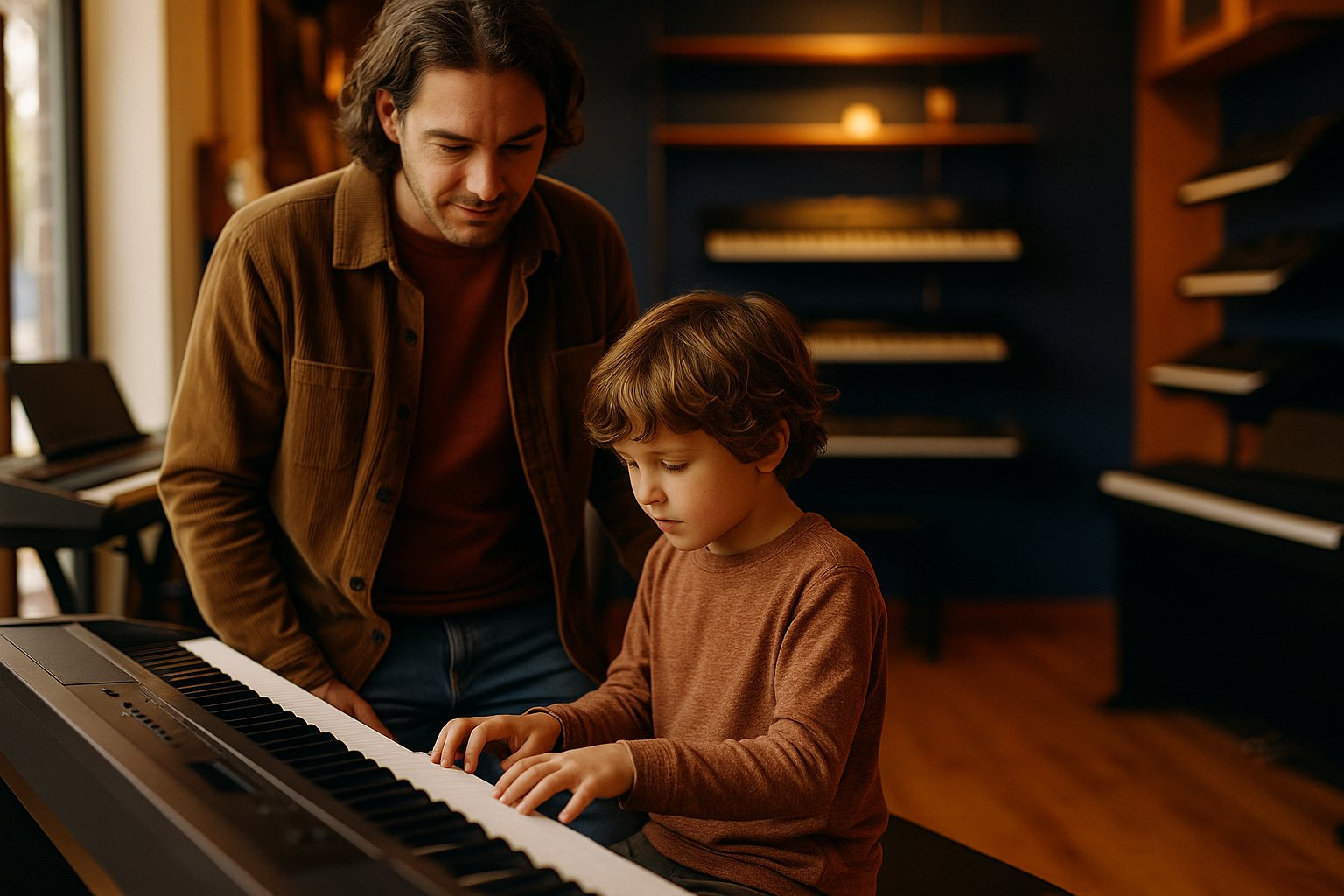
Walk into our Footscray showroom on a Saturday and the most common question we hear is some version of this: my child has just started lessons — do we need a proper digital piano, or will a cheap keyboard do? It's a fair question, because the price gap is real and the answer isn't always "spend more".
This guide is the honest version of what we say over the counter every week. It's written for parents of new learners, adults coming back to the piano after years away, and AMEB students who need the right keys under their fingers well before exam day.
The Real Difference: 88 Weighted Keys vs 61 Unweighted
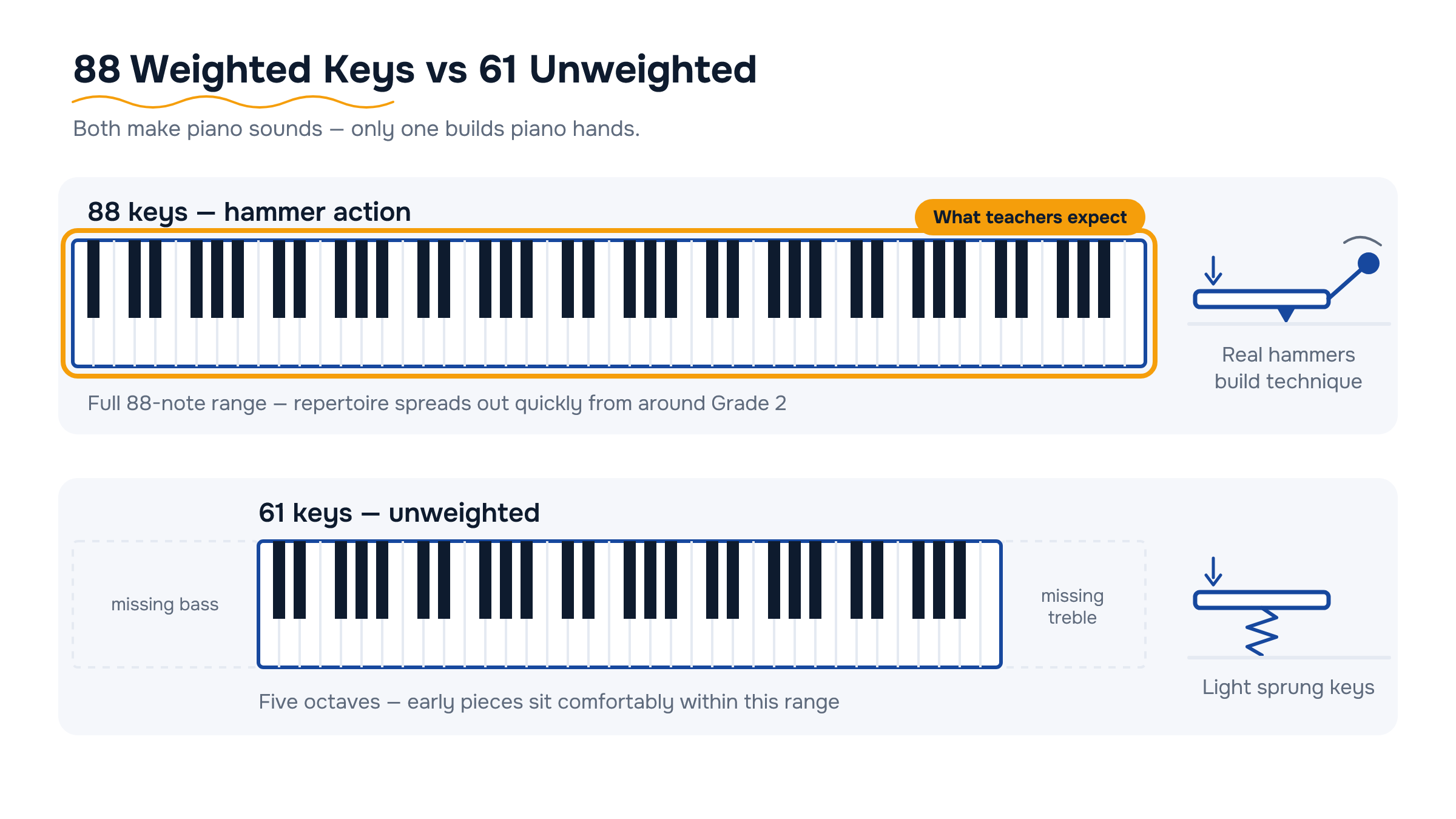
On an acoustic piano, every key throws a small felt hammer at a string. That mechanism has genuine weight under your fingers, and learning to control it — playing soft, loud and everything in between — is half of what piano technique actually is.
An 88-key digital piano rebuilds that hammer mechanism inside each key. A 61-key keyboard doesn't: its keys are light, sprung plastic, closer to an organ than a piano. Both make piano sounds; only one builds piano hands.
This is why teachers insist on weighted keys, and they're not being precious. A student who practises all week on featherweight keys sits down at the teacher's acoustic — or an AMEB exam piano — and it feels like wading through sand. Notes fail to sound, dynamics vanish, and confidence goes with them.
The 88 keys matter too, though less urgently. Early pieces sit comfortably within five octaves, but repertoire spreads out quickly from around Grade 2, and a learner needs to develop a feel for where the ends of the keyboard are. If lessons are booked, 88 weighted keys is our default advice — it's genuinely cheaper than buying a keyboard now and a digital piano eighteen months later.
Touch Response: The Grades That Matter
"Touch sensitive" on a box only means the volume responds to how hard you strike. The key itself can still be feather-light. Here's the real ladder, bottom to top:
- No touch response — one volume no matter how you play. Fine on a toy, useless for lessons. Avoid.
- Touch-sensitive, unweighted — what most 61-key keyboards have. Volume responds, but there's no resistance to build finger strength against.
- Semi-weighted — sprung keys with added resistance. Common on synths; a halfway house, not a destination.
- Hammer action — a real weighted hammer mechanism inside each key. This is the minimum for serious study.
- Graded (scaled) hammer action — heavier in the bass, lighter in the treble, exactly like an acoustic. Casio, Korg and Alesis all build graded actions into their 88-key pianos, even at entry level.
Our shop-floor test: press a key down slowly and let it back up. On a true hammer action you can feel the mass of the hammer move inside, and the key returns with a little momentum. On a sprung keyboard it just pops straight back, like a doorbell. Five seconds at the keys tells you more than any spec sheet.
When a 61-Key Keyboard Is the Right Call
We sell a lot of keyboards, and not as a consolation prize. There are situations where a keyboard is genuinely the better buy:
- Kids under about six. Short attention spans and growing hands are well served by a touch-sensitive 61-key keyboard with built-in lesson features. If they take to it, upgrade with confidence later.
- The school list says "keyboard". Classroom music programs usually mean exactly that — light, portable, and a battery option is handy.
- Songwriters and singers. Arranger keyboards add backing rhythms, auto-accompaniment and hundreds of sounds — a one-person band. Casio and Korg both do this very well; have a look through our arrangers and stage pianos.
- The budget is genuinely under $300. A decent keyboard now beats no instrument at all. Music started on a modest keyboard is still music started.
Two non-negotiables whatever you choose: full-size keys (mini keys teach the wrong hand spacing, even to small hands) and touch response. Both exist comfortably under $300, so there's no need to settle for less.
Console vs Portable Digital Pianos
Decided on 88 weighted keys? Good. Now there are two body styles, and the choice is about your home as much as your hands.
Console digital pianos come in a fixed cabinet with three pedals built in, usually a sliding key cover, and speakers positioned to fill a room. They look like furniture, they put the keys at the correct height automatically, and a permanent instrument in a permanent spot quietly encourages daily practice. The trade-off: most weigh 35 kg or more, and they need a wall to live against.
Portable (slab) digital pianos pack the same weighted keys into a 10–13 kg slab — something like a Casio CDP or an Alesis Concert. They suit renters, small rooms, and anyone who'll carry the piano to lessons, church or rehearsals. You'll need to add a stand and a pedal, which we cover below.
Stage pianos are the professional end of portable: better actions and sounds, but many have no built-in speakers at all because they're designed to plug into a PA. At home, pair one with headphones or a dedicated piano and keyboard amp — keyboard amps are voiced flat and full-range, so the piano sound stays honest instead of getting a guitar amp's colour.
Stands, Benches, Pedals and Headphones
Whatever portable piano you choose, budget for the setup around it — posture habits form in the first month and they're hard to undo.
- Stand. A single-braced X-stand is cheap and folds flat, but it wobbles under hammer-action playing. A double-braced X or a Z-frame stand holds 88 weighted keys steady at a consistent height, and wooden furniture-style stands made for specific models are the most stable of all.
- Bench. An adjustable stool or bench matters more than people expect: forearms should sit level with the keys. A kitchen chair is almost always too low for kids and too unforgiving for a forty-five minute practice session.
- Pedal. The plastic footswitch boxed with many portables slides across floorboards and feels nothing like the real thing. A piano-style sustain pedal is a cheap upgrade, and sustain turns up in AMEB repertoire from the early grades. Triple-pedal units exist for portables once the music calls for them.
- Headphones. The apartment-saver. Closed-back, over-ear headphones make 9pm practice silent to the rest of the house, and many pianos have two jacks so a parent or teacher can listen in. Skip earbuds for long sessions.
And polyphony, in one sentence: it's how many notes the instrument can sound at once — 64 is fine for a beginner, and 128 or more means nothing ever cuts out under the sustain pedal.
Still torn between two? That's exactly what the showroom is for. Call us on 03 4151 5751 or drop into 284-288 Ballarat Rd, Footscray and play them side by side — we'll put your kid in front of the right keys, not the dearest ones.
What your budget gets you
Under $300
Under-sevens, school keyboard lists, and anyone testing the waters before lessons are booked.
A 61-key touch-sensitive keyboard with built-in speakers and lesson features. Insist on full-size keys, and skip anything without touch response.
Shop Keyboards under $300 →$500–$1,000
Most beginners starting formal lessons — this is the band we point families to first.
An 88-key portable with graded hammer action, something like a Casio CDP or Alesis Concert. Leave room in the budget for a stand, bench and piano-style pedal.
Shop Digital Pianos $500–$1,000 →$1,000–$2,000
Committed students heading into the AMEB grades, and adult returners who want to buy once.
Noticeably better key actions and piano sounds, stronger speakers, and console cabinets with three pedals and a sliding key cover built in.
Shop Digital Pianos $1,000–$2,000 →Around $2,000+
Advanced students, gigging players, and anyone replacing an acoustic piano.
Premium actions (some with wooden keys), flagship piano sound engines, and professional stage pianos. Bring your exam pieces in and trust your hands.
Shop Arrangers & Stage Pianos from $2,000 →Compare at a glance
| Type | Best for | Watch out for | Typical spend |
|---|---|---|---|
| 61-key keyboard | First sounds, young kids, casual fun | Unweighted keys won't carry a student past the first year of lessons | Under $300 |
| Arranger keyboard | Singers and solo entertainers who want rhythms and auto-accompaniment | Mostly unweighted — it's a band in a box, not an exam piano | $400–$1,500 |
| Portable digital piano | Lessons, AMEB exams, renters and small rooms | Stand, bench and a decent pedal are usually sold separately | $500–$1,500 |
| Console digital piano | Family homes and long-term students | Heavy and semi-permanent — measure your space first | $1,000–$2,500+ |
| Stage piano | Gigging and advanced players | Many have no built-in speakers — you'll need an amp or headphones | $1,500+ |
Common mistakes to avoid
- Buying unweighted "to see if they stick with it" By the end of the first lesson book, the teacher will be asking for dynamics that unweighted keys can't teach. If lessons are already booked, start weighted — it's cheaper than buying twice.
- Counting voices instead of judging the piano sound A spec sheet boasting 700 tones tells you nothing about the one sound you'll use 95 per cent of the time. Judge the main grand piano sound and the key feel first; ignore the rest.
- Forgetting the setup around it A wobbly stand at the wrong height plus a kitchen chair builds bad posture habits fast. Price the stand, adjustable bench, pedal and headphones into the original budget.
- Choosing mini keys for small hands Small hands don't need small keys — kids adapt to full-size keys within weeks, and mini keys teach the wrong spacing they'll only have to unlearn.
- Treating the pedal as optional The plastic footswitch in the box slides around and feels nothing like a piano pedal. Sustain appears in AMEB pieces from the early grades, so get a piano-style pedal early.
Your questions, answered
Does a beginner really need 88 weighted keys?
For formal lessons, yes — weighted keys build the finger strength and dynamic control teachers assess from the very first grades. For casual playing or kids under about six, a 61-key touch-sensitive keyboard is a sensible start. If lessons are booked, weighted is the safer money.
What's the difference between touch-sensitive and weighted?
Touch-sensitive only means the volume responds to how hard you strike — the key itself is still feather-light. Weighted (hammer action) keys have a real mechanism with resistance, like an acoustic piano. Graded hammer action goes a step further: heavier in the bass, lighter in the treble.
What is polyphony and how much do I need?
Polyphony is how many notes can sound at once before the oldest ones cut off. 64-note polyphony is fine for beginners, and 128 or more means sustained passages and layered sounds never drop notes. Almost every current digital piano clears that bar comfortably.
Will a digital piano prepare my child for AMEB exams?
Yes — you practise at home on the digital, and the exam itself is usually played on an acoustic. That's exactly why teachers insist on graded hammer action: so the exam piano doesn't feel foreign on the day. A good 88-key digital piano carries a student comfortably through the grades.
Can my child practise quietly in an apartment?
Yes — it's one of the biggest reasons families choose digital. Plug in a pair of closed-back headphones and the room is silent apart from the soft thud of the keys. Many models have two headphone jacks so a parent or teacher can listen in.
Do digital pianos need tuning?
No. There are no strings to drift, so there's no tuning cost — ever. Beyond keeping dust and drinks away they're essentially maintenance-free, and because we're an authorised Australian dealer everything we sell carries the full manufacturer warranty.
Can I pay it off, and how does delivery work?
Afterpay and Zip are both available — Afterpay splits the purchase into four interest-free instalments. Shipping is free Australia-wide over $150, tracked and insured, with same-day dispatch on weekday orders before 2pm AEST, or you can Click & Collect from the Footscray showroom.
Shop the categories in this guide
Keep reading: Headphones & Studio Monitors · Synths & MIDI
Try our in-store range in Footscray
Come and play what we’ve got on the floor side by side — real players on hand, honest advice, and genuine authorised Australian stock with full manufacturer warranty. Call ahead and we’ll check what’s in store for you to try.
Talk to our experts — in-store or on the phone
Still torn between two? Our team are real players who know this gear inside out. Call us, message us, or drop in and play what we’ve got in store. Reserve online for Click & Collect — we’ll confirm it’s ready before you come in — genuine stock, full manufacturer warranty, and your Consumer Law rights always apply.
Visit the Footscray showroom
Why you can trust this advice
Written & reviewed by
The Scarlett Music Team
Footscray showroom & workshop · Independent dealer since 1997
This guide is written by the same team that sells, demos and plays this gear six days a week — so our picks come from hands-on experience with the actual instruments, not a spec sheet. We only recommend genuine, authorised Australian stock, and pricing and availability are reviewed and updated regularly.





Leave a comment