
How to Choose Headphones & Studio Monitors
Open or closed back? Flat or fun? An honest guide to choosing headphones, studio monitors and in-ears for practice, recording and mixing, from our Footscray floor.
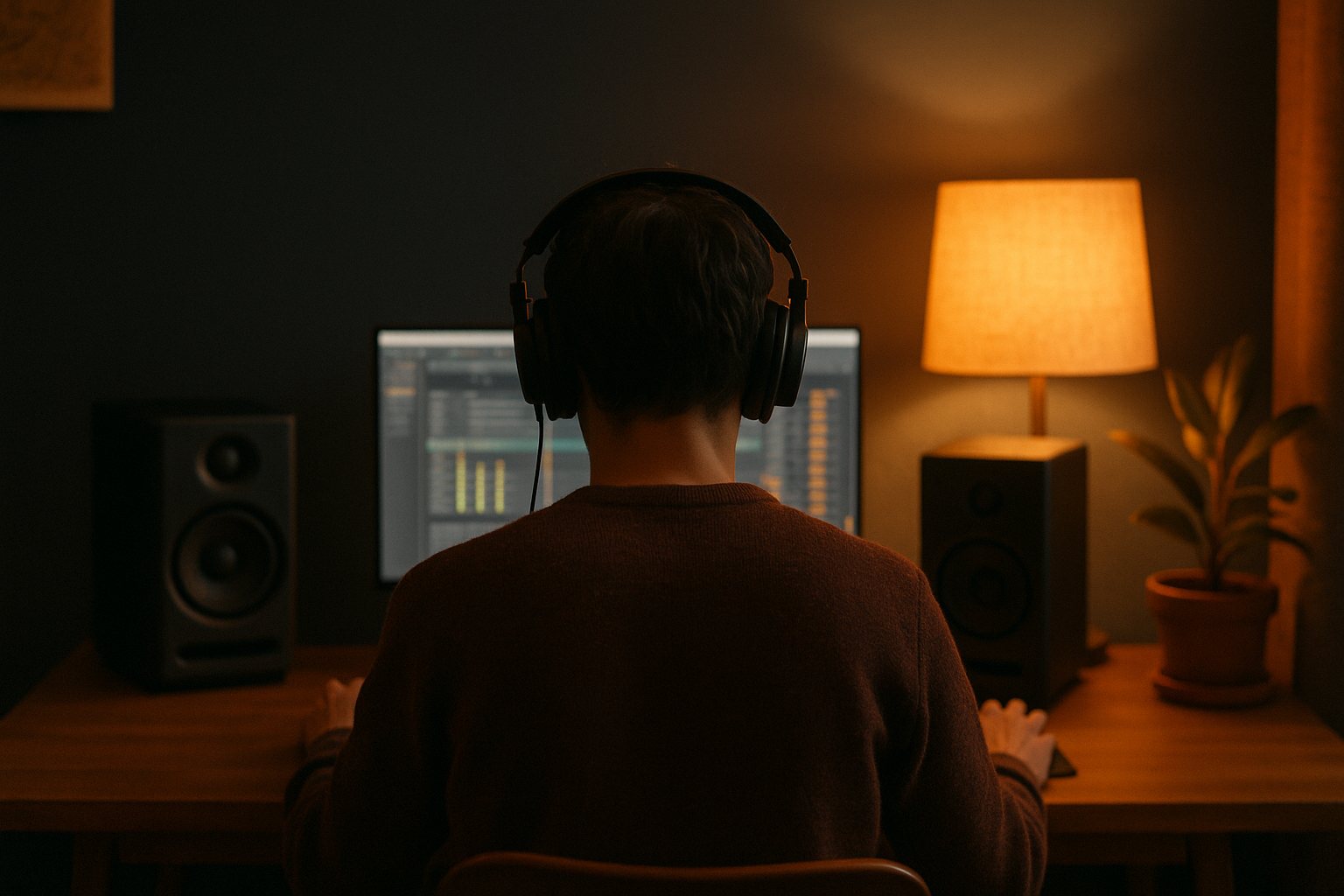
This is the gear you hear everything through, so getting it right matters more than most people expect. Whether you're practising silently on an e-kit at midnight, tracking vocals at the kitchen table or trying to mix a song that sounds right everywhere, the headphones or speakers you choose quietly shape every decision you make.
The good news is the rules are simple once someone explains them plainly. This guide covers open versus closed back, why a flat speaker beats an exciting one for serious work, how studio monitors really differ from hi-fi speakers, sizing a monitor to your room, and where in-ears fit for stage. By the end you'll know exactly what to buy for what you do.
Open vs Closed Back: Which for What
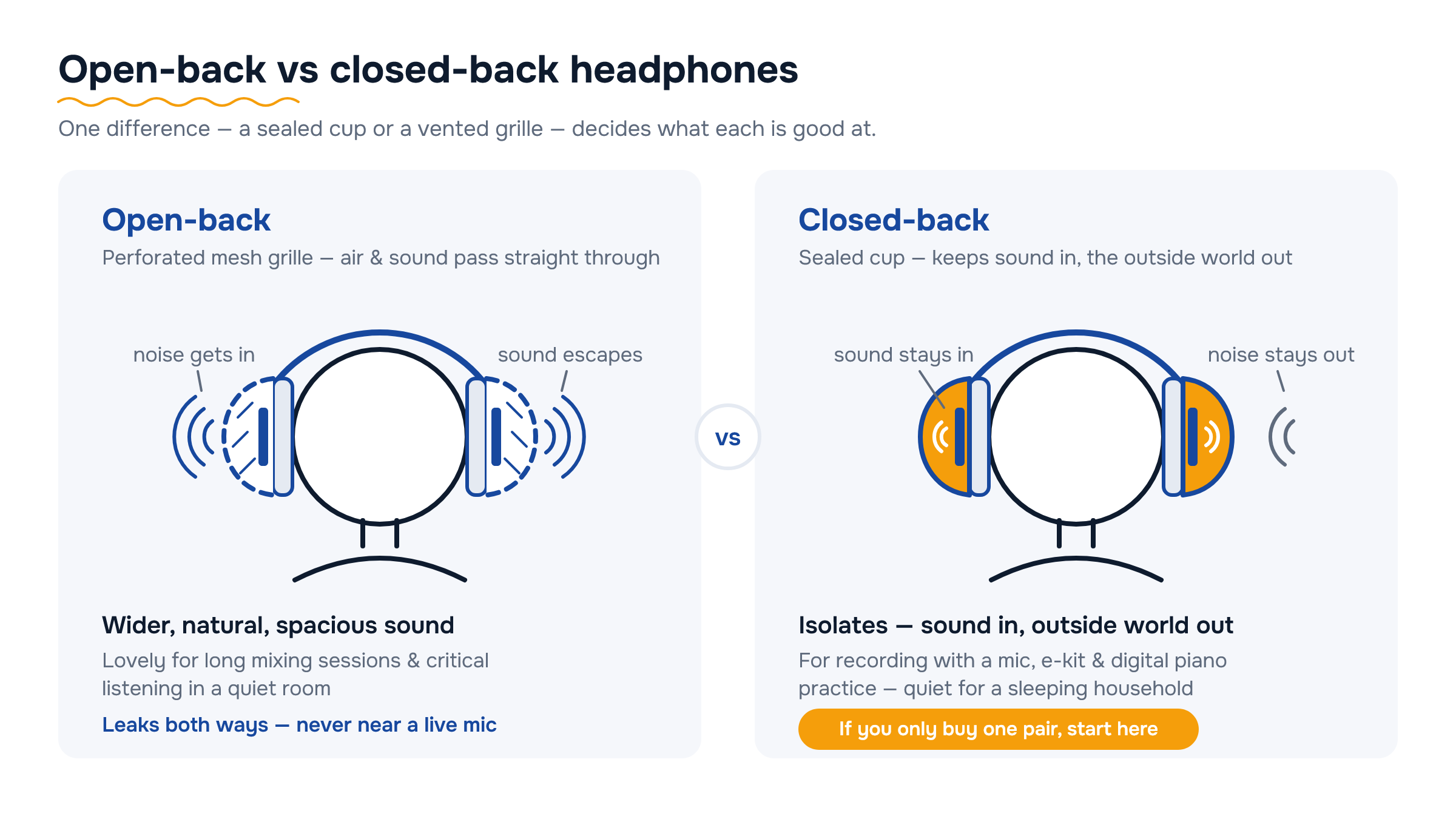
The single most useful thing to understand about headphones is the back of the earcup. Closed-back cups are sealed; open-back cups have a perforated or mesh grille that lets air (and sound) pass straight through. That one difference decides what each is good at.
Closed-back headphones keep sound in and the outside world out. Nothing leaks into a microphone, and nothing leaks out to a sleeping household. That makes them the right call for the two noisiest practice situations we sell into every week:
- Practising on an electronic kit or digital piano — closed-back isolation means you hear the module clearly and the room stays quiet for everyone else.
- Recording with a microphone — a sealed cup stops your backing track bleeding into the take. Open-back headphones spill audio the mic picks up.
Open-back headphones sound more natural and spacious, with a wider, less boxed-in stereo image. That openness is lovely for long mixing sessions and critical listening, but they leak badly in both directions and isolate almost nothing. Never use them near a live mic or on a quiet train. If you only buy one pair, make it closed-back. Browse the full range of studio headphones and the matching replacement cables while you're choosing.
Why 'Flat' Beats 'Fun' for Mixing
Consumer headphones and speakers are tuned to be fun: scooped, exciting, with hyped bass and sparkly treble that makes everything sound great straight out of the box. That's exactly what you don't want when you're making decisions about a recording.
Studio gear aims for flat instead — a neutral response that doesn't add or hide anything. The point isn't that flat sounds nicer; it's that flat sounds honest. If a speaker hypes the bass, you'll pull bass out of your mix to compensate, and the moment that mix plays on any other system the bass will be too thin. Flat gear shows you the problems so you can fix them, rather than flattering you into leaving them in.
A simple way to think about it:
- Fun gear is for enjoying finished music. It makes everything sound better, including bad mixes.
- Flat gear is for making music. It tells you the truth, even when the truth is unflattering.
This is why mixing on a typical Bluetooth speaker or bass-heavy earbuds leads to mixes that travel badly. For anything you want to sound right on other people's systems, work on neutral studio monitors or honest, flat-response headphones.
Studio Monitors vs Hi-Fi Speakers, Honestly
People often ask whether they can just use their hi-fi speakers, or whether studio monitors will make a nice listening setup. The honest answer to both is: not really, because they're built for opposite jobs.
Hi-fi speakers are designed to flatter the music — to make your favourite records sound as pleasing as possible in a lounge room, often with a deliberately warm, scooped or sweetened voicing. Studio monitors are designed to reveal the music — flat response, fast transient detail and a tight, defined stereo image so you can hear exactly what you've recorded, warts and all.
Two practical differences:
- Active vs passive. Almost all studio monitors are active — the power amp is built into each cabinet, matched to the speaker, so you just feed them a line signal. Hi-fi speakers are usually passive and need a separate amplifier.
- Near-field design. Monitors are voiced to be listened to up close, a metre or so away, which reduces how much your room colours the sound. Hi-fi speakers are voiced to fill a room.
Can you listen to music on monitors? Of course, and plenty of people do. Just know they won't gloss over a bad recording the way a hi-fi will. If your goal is mixing, monitors are the right tool; if your goal is pure listening pleasure, a good pair of bookshelf speakers may suit you better.
Matching Monitor Size to Your Room
The most common monitor mistake is buying too big. A monitor's woofer size sets how much bass it makes — and a small room simply can't handle a lot of bass cleanly. Oversized monitors in a small bedroom produce a boomy, uneven low end that lies to you, and you'll mix the bass too quiet to compensate.
Match the woofer to the room:
- 5-inch monitors — the sweet spot for most home setups: bedrooms, spare rooms and desktops up to roughly 3 x 3 metres. Enough bass to mix on, not so much it overwhelms a small space.
- 6.5 to 7-inch monitors — for a dedicated studio room or larger space, around 4 x 5 metres and up, where the extra low-end extension has room to develop.
- 3 to 4-inch monitors — for very tight desks and quiet apartments. Pair them with headphones to check the bass they can't reproduce.
Two things matter as much as size. First, set them up properly: tweeters at ear height, monitors and your head forming a roughly equal-sided triangle, and a hand-span off the wall to tame boom. Second, the room itself colours the sound more than most gear does — a few acoustic panels at the early-reflection points often improve a mix more than spending double on the speakers.
In-Ears for Stage, and Impedance in a Sentence
In-ear monitors are the live-performance answer to wedge monitors. Instead of pointing a speaker at yourself on stage, you get a personal, isolated mix sent straight to your ears — you hear yourself clearly, you protect your hearing from stage volume, and the band sounds cleaner out front without wedges fighting the PA.
For musicians playing to a click, like drummers, or singers who need to hear themselves over a loud band, in-ear monitors are transformative. Universal-fit pairs with good foam or silicone tips suit most players starting out; custom-moulded IEMs come later, when you know you want the best seal and isolation money can buy.
And the one piece of jargon worth knowing — impedance, measured in ohms: low-impedance headphones (around 32 ohms) run loud enough straight from a phone, laptop or e-kit module, while high-impedance models (250 ohms and up) sound their best but need a dedicated headphone amp or interface to drive them properly. For practice straight off a device, stick with low impedance and you'll never think about it again.
None of this beats hearing it for yourself. Pop into the Footscray showroom or call us on 03 4151 5751 and we'll let you A/B open against closed, big monitors against small, and a few IEMs in your own ears — five minutes of listening tells you more than any spec sheet.
What your budget gets you
Under $150
E-kit drummers and digital piano owners who just need a solid, quiet practice pair.
Reliable closed-back headphones with good isolation and a comfortable fit for long sessions. Look for low impedance so they run loud straight off your module, and check the cable is replaceable.
Shop Headphones under $150 →$150-$400
Home recordists and anyone starting to mix who wants honest sound.
A genuine pair of flat-response studio headphones, or your first pair of 5-inch active studio monitors. At this level the monitors are the better long-term buy if you have a quiet room to use them in.
Shop Studio Monitors $150–$400 →$400-$1,000
Producers building a real mixing setup and stage players moving to in-ears.
A solid pair of 5 to 7-inch monitors matched to your room, or a quality set of universal-fit in-ear monitors. Budget a little here for acoustic panels too — they punch well above their price.
Shop In-Ear Monitors $400–$1,000 →Around $1,000+
Serious home and project studios chasing accuracy you can trust completely.
Reference-grade monitors with extended low end, premium open-back headphones for critical listening, and room treatment to match. At this level the room becomes the limiting factor, not the speakers.
Acoustic Panels →Compare at a glance
| Type | Best for | Watch out for | Typical spend |
|---|---|---|---|
| Closed-back headphones | Silent practice, recording with a mic, isolation in noisy rooms | Slightly less natural soundstage than open-back; can get warm over long sessions | $80-$400 |
| Open-back headphones | Long mixing sessions and critical listening at home | Leak sound both ways — useless near a live mic or in shared spaces | $200-$800 |
| Studio monitors (active) | Mixing and producing; the most accurate way to hear a mix in a room | Need a treated, quiet room; oversize woofers wreck small rooms | $300-$2,000+ |
| In-ear monitors | Stage use, drummers on a click, hearing protection live | A good seal is everything; cheap pairs sound thin and isolate poorly | $150-$1,000+ |
| Hi-fi / consumer speakers | Enjoying finished music in a lounge room | Voiced to flatter, not reveal — they hide mix problems instead of showing them | $200-$2,000+ |
Common mistakes to avoid
- Mixing on fun-sounding gear Bass-heavy earbuds and hyped Bluetooth speakers make every mix sound great in the room and terrible everywhere else. Decisions need flat, honest gear so your mixes translate to other people's systems.
- Using open-back headphones to record Open-back cups leak your backing track straight into the microphone, ruining the take. For tracking with a mic, closed-back isolation isn't optional.
- Buying monitors too big for the room A 7 or 8-inch monitor in a small bedroom produces boomy, uneven bass that lies to you. Match the woofer to the space — 5-inch suits most home rooms.
- Ignoring the room entirely A bare, square room colours sound more than the difference between two sets of speakers. A handful of acoustic panels at the reflection points often improves a mix more than spending double on monitors.
- Pairing high-impedance headphones with a phone A 250-ohm pair plugged straight into a laptop or e-kit module sounds quiet and gutless. Either choose low-impedance headphones or budget for a headphone amp or interface to drive them.
Your questions, answered
Open or closed back for an electronic drum kit or digital piano?
Closed-back, every time. They isolate well, so you hear the module clearly while the room stays quiet for the rest of the household, and they leak almost nothing. Look for low impedance — around 32 ohms — so they play loud enough straight from the instrument's headphone socket without an extra amp.
Can I mix on headphones instead of studio monitors?
Yes, and many people do, especially in apartments or shared homes where loud speakers aren't an option. Use a flat-response pair rather than bass-heavy consumer headphones, and check your mix on a couple of other devices before you call it done. Monitors give you a more natural sense of space, but honest headphones in a poor room often beat good monitors in an untreated one.
Are studio monitors good for listening to music?
They can be, but that's not what they're for. Monitors are voiced flat to reveal detail rather than flatter the music, so a poor recording will sound poor. If you mainly want pleasurable everyday listening, hi-fi or bookshelf speakers will likely suit you better; if you want to mix, monitors are the right tool.
What size studio monitor do I need for a bedroom?
For most bedrooms and home desks, 5-inch monitors are the sweet spot — enough bass to mix on without overwhelming a small room. Go to 6.5 or 7-inch only in a dedicated or larger room. If your space is very tight, smaller 3 to 4-inch monitors paired with headphones to check the deep bass work well.
What does impedance actually mean for me?
In one sentence: low-impedance headphones (around 32 ohms) run loud off a phone, laptop or e-kit module, while high-impedance ones (250 ohms and up) sound their best but need a dedicated headphone amp or audio interface to drive them properly. For straight-off-a-device practice, choose low impedance and you'll never think about it again.
Do I need in-ear monitors, or will regular headphones do for stage?
For stage you want proper in-ear monitors. They seal in your ear for isolation and a secure fit while you move, take a personal mix from the desk, and protect your hearing from stage volume. Regular headphones don't isolate or stay put under performance conditions. Universal-fit IEMs suit most players starting out; custom moulds come later.
Do studio monitors need a separate amplifier?
Almost never. Nearly all studio monitors are active, meaning the power amp is built into each cabinet and matched to the speaker, so you just connect a line signal from your audio interface or mixer. That's a key difference from passive hi-fi speakers, which need a separate amp to run.
Shop the categories in this guide
Keep reading: Home Recording Buying Guide · Drum Kits Buying Guide · Digital Pianos & Keyboards Buying Guide
Try our in-store range in Footscray
Come and play what we’ve got on the floor side by side — real players on hand, honest advice, and genuine authorised Australian stock with full manufacturer warranty. Call ahead and we’ll check what’s in store for you to try.
Talk to our experts — in-store or on the phone
Still torn between two? Our team are real players who know this gear inside out. Call us, message us, or drop in and play what we’ve got in store. Reserve online for Click & Collect — we’ll confirm it’s ready before you come in — genuine stock, full manufacturer warranty, and your Consumer Law rights always apply.
Visit the Footscray showroom
Why you can trust this advice
Written & reviewed by
The Scarlett Music Team
Footscray showroom & workshop · Independent dealer since 1997
This guide is written by the same team that sells, demos and plays this gear six days a week — so our picks come from hands-on experience with the actual instruments, not a spec sheet. We only recommend genuine, authorised Australian stock, and pricing and availability are reviewed and updated regularly.





Leave a comment