
How to Choose a Drum Kit: Acoustic vs Electronic
Acoustic feel or electronic quiet? An honest guide to drum kits for beginners, kids and returning players — sizing, noise fixes and what to budget, from our Footscray floor.
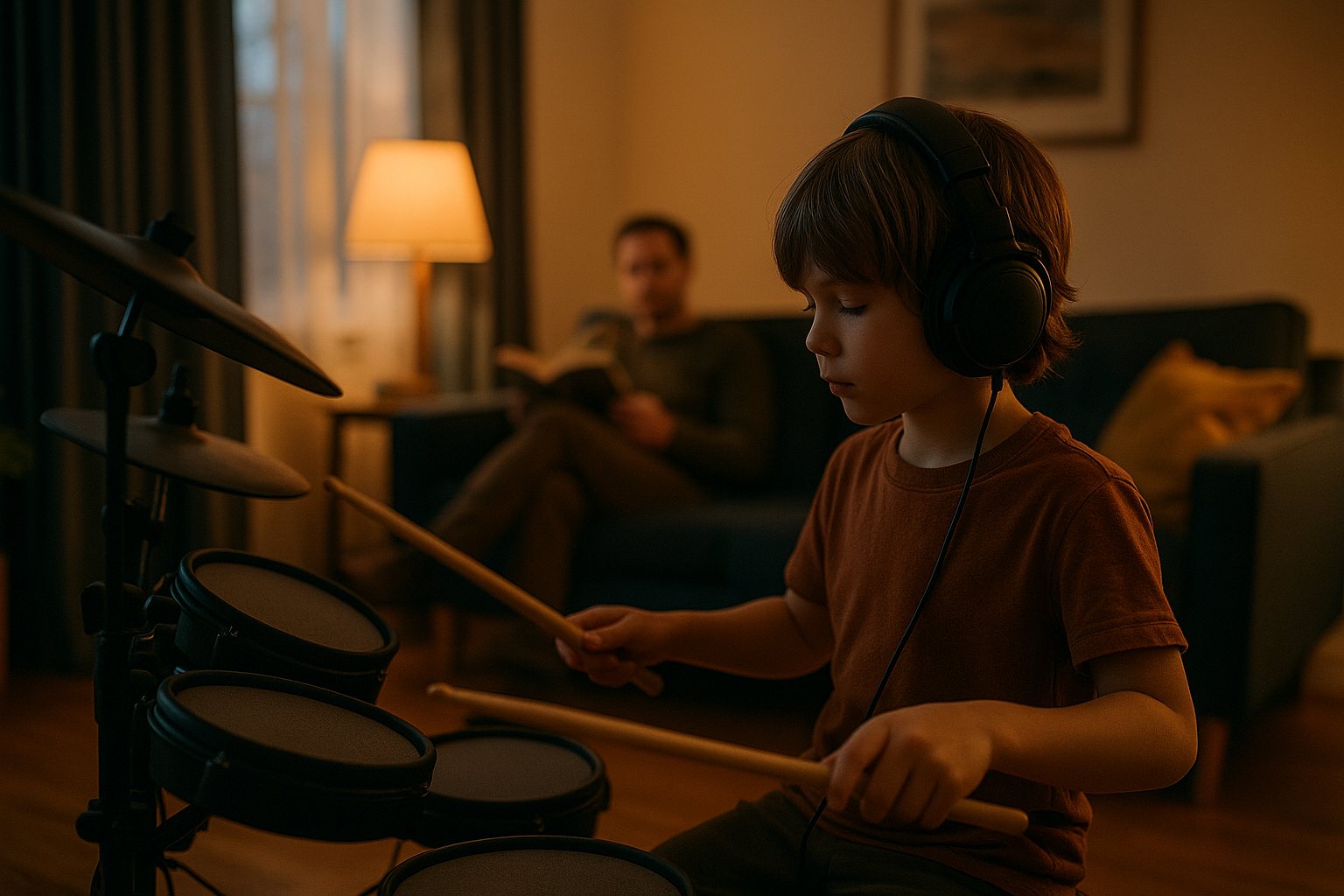
The most common drum question we hear in the Footscray showroom isn't about brands or shell woods — it's how to start drumming without starting a war with the neighbours. Fair question. Drums are the loudest instrument in the house, and the acoustic-versus-electronic decision usually comes down to where you live and who else can hear you.
This guide gives you the honest version of that conversation: what each type actually feels like to play, what's really in the box, how to size a kit for a child, and how to keep the volume civil either way. Whether you're a parent buying a first kit, a beginner of any age or a returning player setting up at home, you'll finish knowing exactly what to buy.
Acoustic vs Electronic: The Honest Answer
An acoustic kit is the real instrument. The rebound off a proper drumhead, the way a crash swells when you lean into it, a 22-inch kick you feel through the floor — no electronic kit fully replicates that, and every drummer should spend time on one eventually. The catch is volume. A properly played acoustic kit sits around 100-110 dB, there is no volume knob, and mutes only tame it so far.
An electronic kit trades a little of that feel for total volume control. With headphones on, the loudest things in the room are stick patter on the pads and the thump of the kick pedal — roughly conversation level. For anyone in an apartment, townhouse or house with thin walls, that's not a compromise; it's the difference between practising daily and not practising at all.
Our honest steer after years of selling both:
- Detached house, garage or tolerant household: go acoustic. It's more rewarding to learn on and there's nothing to outgrow.
- Shared walls, shared floors, or practice after 8pm: go electronic, no contest. Modern mesh-head kits are genuinely good to play.
- Returning player who misses real drums: consider an acoustic kit quietened with low-volume cymbals and mesh heads — more on that below.
What's Actually in a 5-Piece Kit
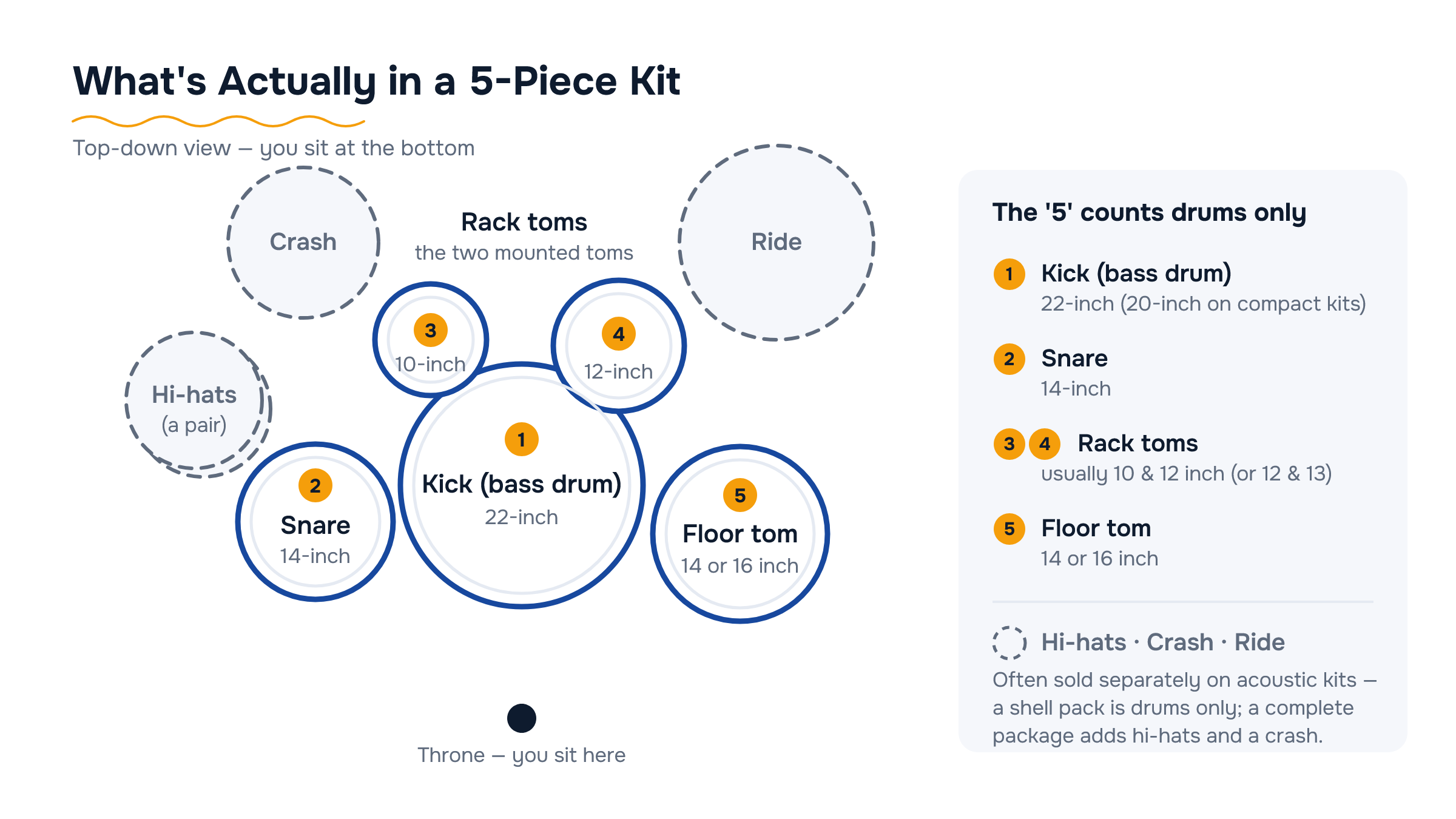
Five-piece counts the drums only: a 22-inch bass drum (20-inch on compact kits), a 14-inch snare, two mounted toms (usually 10 and 12 inch, or 12 and 13) and a 14- or 16-inch floor tom. That number says nothing about cymbals or stands — which is exactly where new buyers get caught.
Check the listing for these three phrases:
- Shell pack — drums only. No cymbals, no stands, no kick pedal. Common from the mid-range up, because players at that level already own hardware.
- With hardware — adds the metalwork: hi-hat stand, cymbal stand, snare stand and kick pedal. Still no cymbals.
- Complete package — drums, hardware and a starter set of cymbals, typically hi-hats and a crash. Most entry-level kits are sold this way.
If your kit needs cymbals, a matched cymbal pack — hi-hats, crash and ride in one box — is far better value than buying pieces one at a time. Electronic kits are simpler: nearly everything is in the carton except a throne, sticks and headphones.
Junior Kits and Sizing by Age
Kids can't play a kit they can't reach. If their feet don't sit flat on the pedals and they can't get over the toms without shrugging, technique suffers from the first lesson. Size by height first, age second.
- Ages 3-6 (under about 110 cm): a junior kit with a 16-inch bass drum, scaled-down stands and a low seat — kids drum stools drop well below standard thrones. These usually arrive complete with small cymbals.
- Ages 7-9 (roughly 110-135 cm): a junior kit still fits early on, but a compact kit with an 18-inch bass drum lasts years longer and is the better buy for most families.
- Ages 10 and up: full size. Compact 18-inch kits remain a great option for small bedrooms — plenty of adults choose them too.
Electronic kits sidestep some of this because the rack adjusts down. From about age seven, most kids manage a standard e-kit with the throne at its lowest setting. For littlies, a junior acoustic kit is still the better physical fit.
Mesh vs Rubber Pads on Electronic Kits
On an e-kit, the pads are the instrument. The module matters, but the surface under your stick decides whether daily practice feels like drumming or like tapping a desk.
- Rubber pads — the entry-level standard. Durable and cheap, but the rebound is bouncier than a real drumhead and the stick noise is noticeably louder: a hard, plasticky tap rather than a soft thud.
- Mesh heads — woven heads you tension with a drum key, just like tuning a real drum. Quieter under the stick, far more realistic rebound, and the standard on anything decent from the mid-range up.
Our advice from the floor: a mesh snare is the minimum worth buying, and an all-mesh kit — something in the class of an Alesis Nitro Mesh — is worth the modest extra spend for anyone practising regularly. While you're comparing electronic kits, also check the kick: a proper kick tower you strike with a real pedal builds correct technique, where a footswitch-style trigger doesn't. Count the cymbal inputs, and look for cymbals you can choke (grab to stop) — small things that matter more every month you play.
Volume Solutions for Acoustic Kits
You can pull a surprising amount of volume out of an acoustic kit without selling it. From most effective to cheapest:
- Low-volume cymbals — perforated metal cymbals around 80 per cent quieter than standard, with real cymbal feel under the stick. The single best upgrade for quiet practice.
- Mesh practice heads — swap your regular heads for mesh and the drums go near-silent while keeping honest rebound. Combined with low-volume cymbals, the whole kit drops to conversation level.
- Rubber mutes and o-rings — pads that sit on top of your existing heads. Cheapest option and easy to throw on for an evening, but they deaden rebound and tone, so they're best for short stints rather than every session. Browse mutes and dampeners to see the options.
The honest caveat: quieter is not silent. Kick-pedal thump still travels through the structure of a building, so a converted kit suits a detached house with nearby neighbours, not a third-floor flat. If you share walls or floors, that's an electronic kit's job.
What Else You'll Need on Day One
Budget a little past the kit itself so week one isn't a scramble:
- A throne — a proper height-adjustable drum stool. A dining chair is the wrong height and teaches slouched, awkward posture from day one.
- Sticks — 5A is the all-purpose standard; 7A is lighter and better for small hands. Buy two pairs, because the first pair always goes missing.
- Headphones for e-kits — most modules have no speaker, so closed-back headphones are essential, not optional. Our headphones and monitors guide covers what to look for.
- Hearing protection for acoustic kits — earplugs or earmuffs are non-negotiable at 100-plus dB, especially for kids.
- A drum key and a rug — the key tunes heads and tensions mesh; the rug stops the kit creeping across the floor.
If you're amplifying an e-kit for jamming later, a drum amp does the job — but headphones cover the first year for most players. Still weighing acoustic against electronic? Call us on 03 4151 5751 or drop into the Footscray showroom and play both side by side — five minutes with sticks in hand beats any spec sheet, and we'll size a junior kit on the spot.
What your budget gets you
Under $500
Parents buying a first junior kit, or anyone testing the waters before committing.
Junior acoustic kits with a 16-inch bass drum usually arrive complete with small cymbals and a stool. Electronic kits at this level are mostly rubber pads — fine for a trial run, but mesh is worth stretching for.
Shop Acoustic Drums under $500 →$500-$1,000
The beginner sweet spot, especially for electronic kits.
All-mesh electronic kits with solid modules and proper kick towers live here, alongside entry full-size acoustic packages. Always check whether hardware and cymbals are included before comparing two prices.
Shop Electronic Drums $500–$1,000 →$1,000-$2,000
Committed learners and returning players who want gear that won't need replacing.
Acoustic shells step up from poplar to birch and maple with sturdier hardware, and e-kit modules and pad feel improve noticeably. On acoustics, this is where you pair a quality kit with a proper cymbal pack.
Shop Drum Kits $1,000–$2,000 →Around $2,000+
Gigging drummers and players who know exactly the sound they're after.
Pro-level shell packs in maple or birch, flagship electronic kits, and cymbals chosen individually rather than in packs. At this level the cymbals can cost as much as the drums — and they're worth it.
Cymbals →Compare at a glance
| Type | Best for | Watch out for | Typical spend |
|---|---|---|---|
| Acoustic 5-piece kit | The real feel and sound; garages, detached homes, band practice and gigs | Volume — around 100-110 dB with no way to turn it down; cymbals often sold separately | $700-$2,000+ |
| Electronic kit (mesh heads) | Apartments, townhouses and late-night practice through headphones | Stick patter and kick-pedal thump still travel through floors; throne and headphones rarely included | $700-$2,000 |
| Electronic kit (rubber pads) | Tight budgets and casual, occasional practice | Bouncier rebound and louder stick noise than mesh; harder to build real dynamics | Under $700 |
| Junior acoustic kit | Kids roughly 3-9, sized so feet and arms actually reach | Outgrown within a few years; cymbals and heads are basic at this price | Under $500 |
| Low-volume acoustic conversion | Returning players who want their real kit at a fraction of the volume | Not silent — pedal thump remains; cymbals and mesh heads add a few hundred dollars | $200-$600 on top of the kit |
Common mistakes to avoid
- Buying acoustic for an apartment and hoping for the best Mutes and pillows tame an acoustic kit but never make it neighbour-proof, and an unplayable kit teaches nobody. If you share walls or floors, an electronic kit isn't the compromise — it's the correct tool.
- Assuming cymbals are included A shell pack is drums only, and even kits with hardware often ship without a single cymbal. Read the listing before comparing two prices — the cheaper kit is often the one missing $400 of metal.
- Going rubber pads to save a hundred dollars Rubber-pad e-kits feel bouncy and sound clacky under the stick, and they're the first thing players want to upgrade. A mesh snare at minimum — ideally all-mesh — keeps practice feeling like drumming.
- Skipping the throne A dining chair is the wrong height, doesn't adjust and builds slouched posture and a sore back. An adjustable throne is day-one equipment, not a later upgrade.
- Buying a full-size kit for a six-year-old to grow into If they can't reach the pedals and toms today, they'll learn awkward technique today. Junior kits are inexpensive and resell easily once outgrown — size for the child you have, not the teenager they'll become.
Your questions, answered
Will an electronic drum kit disturb the neighbours?
Through headphones the drum sounds themselves are silent, but the kit isn't physically silent: sticks on mesh sound like fast tapping, and the kick pedal sends a low thump through the floor. In a detached house it's a non-issue. In an apartment, put the kit on a rug or foam riser and it's still dramatically quieter than any acoustic option.
What age can my child start learning drums?
Most teachers take students from around five, and a junior kit with a 16-inch bass drum suits roughly ages three to nine. Height matters more than age — if their feet sit flat on the pedals and they can reach the toms without stretching, the kit fits. Bring them into the Footscray store and we'll size them up in two minutes.
Are cymbals included with acoustic drum kits?
Often not. Entry-level packages usually include starter hi-hats and a crash, but mid-range kits and up are commonly sold as shell packs — drums only. Read the listing carefully, and if you need cymbals, a matched pack of hi-hats, crash and ride is much better value than buying one at a time.
Are mesh heads really worth it over rubber pads?
Yes — it's the single biggest feel upgrade on an entry-level electronic kit. Mesh tensions with a drum key like a real drumhead, rebounds naturally and is quieter under the stick. We'd suggest a mesh snare as the minimum, and all-mesh kits start around the $700 mark and hold their value better.
Can my child learn on an electronic kit and move to acoustic later?
Absolutely — the layout, coordination and reading skills transfer directly. The main things they'll notice on an acoustic kit are cymbal feel and dynamic control, and both come quickly. Plenty of students practise on an e-kit at home all week and play acoustic kits at school or in lessons without any trouble.
Can I make my acoustic kit quiet enough for a flat?
Quieter, yes; flat-quiet, usually no. Low-volume cymbals and mesh heads cut roughly 80 per cent of the volume, which is brilliant in a detached house, but kick-pedal thump still travels through a building's structure. If you share walls or floors, an electronic kit is the realistic answer.
Do I need an amp for an electronic kit?
Not to start — headphones are how most people play, since the modules generally have no built-in speaker. You'll only want a drum amp or powered speaker once you're jamming with other musicians or performing. The module's outputs also plug straight into an audio interface when you're ready to record.
Shop the categories in this guide
Keep reading: Headphones & Monitors Buying Guide · Home Recording Buying Guide · School Band Instruments Buying Guide
Try our in-store range in Footscray
Come and play what we’ve got on the floor side by side — real players on hand, honest advice, and genuine authorised Australian stock with full manufacturer warranty. Call ahead and we’ll check what’s in store for you to try.
Talk to our experts — in-store or on the phone
Still torn between two? Our team are real players who know this gear inside out. Call us, message us, or drop in and play what we’ve got in store. Reserve online for Click & Collect — we’ll confirm it’s ready before you come in — genuine stock, full manufacturer warranty, and your Consumer Law rights always apply.
Visit the Footscray showroom
Why you can trust this advice
Written & reviewed by
The Scarlett Music Team
Footscray showroom & workshop · Independent dealer since 1997
This guide is written by the same team that sells, demos and plays this gear six days a week — so our picks come from hands-on experience with the actual instruments, not a spec sheet. We only recommend genuine, authorised Australian stock, and pricing and availability are reviewed and updated regularly.





Leave a comment