
How to Choose a Guitar Amp: Watts, Valves & Modelling
Bedroom practice or pub gig, valve or modelling — Scarlett Music's amp specialists explain wattage, speaker size and amp types so you buy right the first time.
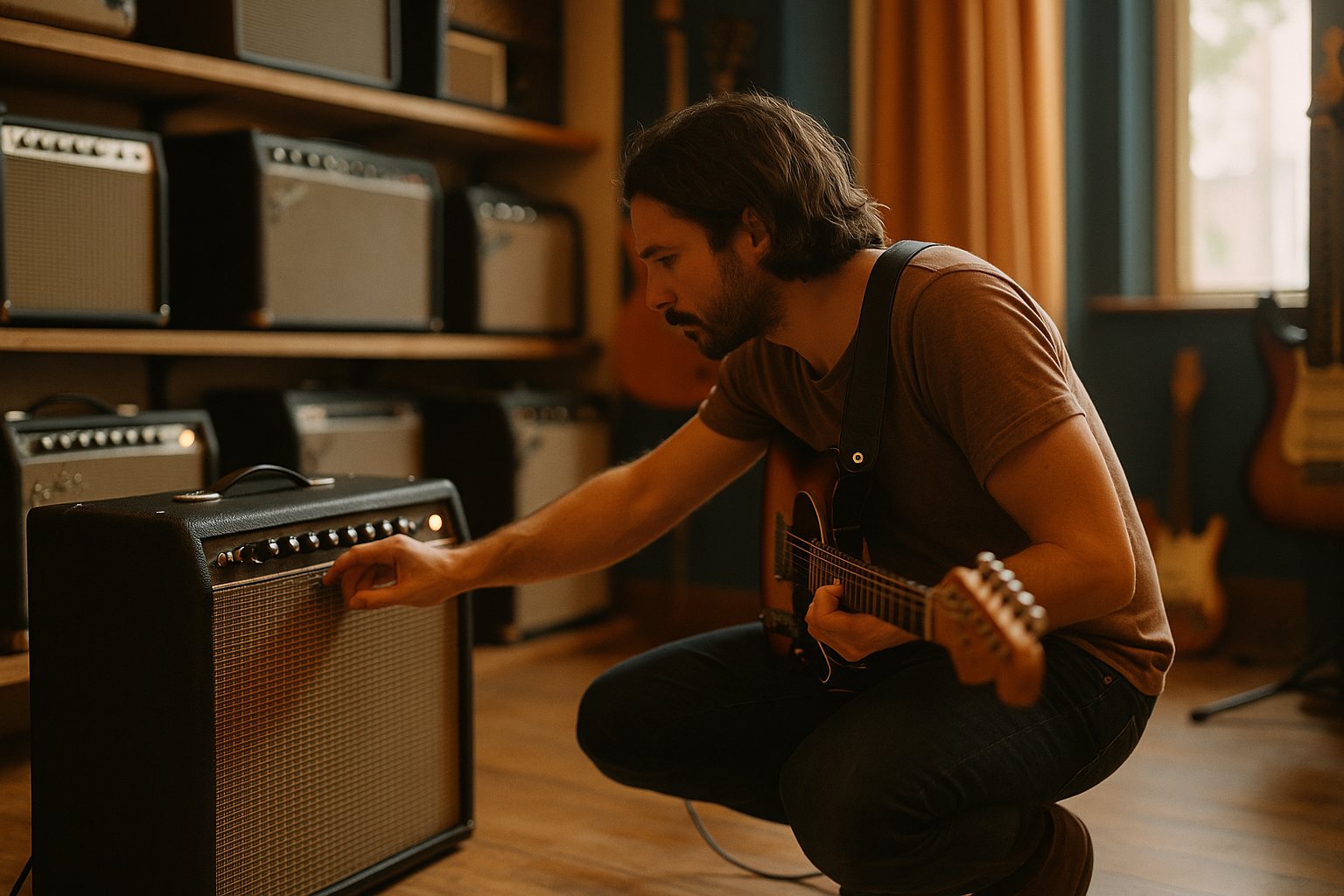
Your amp is half your sound — arguably more than the guitar itself. Whether you're buying your first amp, upgrading from a tired practice box or putting together a proper gig rig, the wall of options (and opinions) can feel overwhelming.
We plug into these amps every week on the floor of our Footscray store, so this guide cuts through the spec sheets: how loud you actually need, combo versus head and cab, and the real differences between valve, solid-state and modelling. By the end you'll know exactly what suits your situation.
How loud do you actually need?
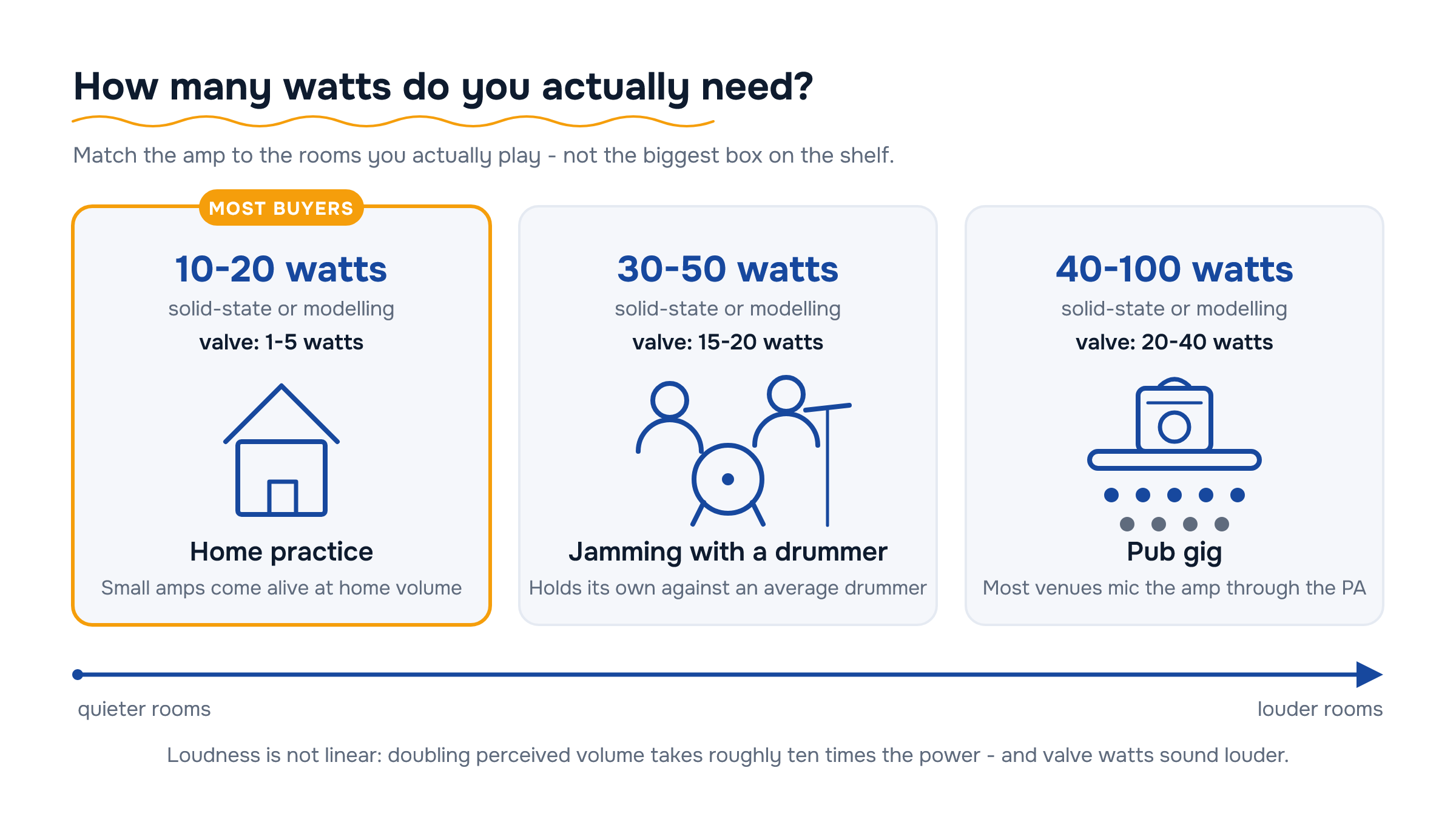
Wattage is the number everyone fixates on, and it's the most misunderstood spec in the shop. Loudness doesn't scale in a straight line — a 30-watt amp is nowhere near three times as loud as a 10-watt amp, and doubling perceived volume takes roughly ten times the power.
Here's what that means in real rooms:
- Bedroom and home practice: 10-20 solid-state or modelling watts is plenty, and even a 1-5 watt valve amp will upset the neighbours. Smaller amps actually sound better at home, because you can turn them up to where they come alive.
- Jamming with a drummer: 30-50 solid-state or modelling watts, or around 15-20 valve watts, will hold its own against an average drummer.
- Pub and club gigs: a 40-100 watt solid-state or modelling combo, or a 20-40 watt valve amp. Most venues mic the amp through the PA anyway, so a 100-watt stack is rarely necessary.
Why do valve watts sound louder? Valve amps compress musically as they're pushed and stay usable right up to full volume, so a 15-watt valve combo keeps up where a 15-watt solid-state practice amp won't. Browse the guitar amps range with those numbers in mind — not the biggest box on the shelf.
Combo or head and cab?
A combo puts the amplifier and speaker in one box: one purchase, one thing to carry, nothing to mismatch. For most players — from first amp through to weekend gigs — a combo is the right call, and a 1x12 combo covers almost any pub stage.
A head and cabinet splits the job: the amplifier section (the head) sits on a separate speaker cabinet. The classic Marshall half stack is the famous example. You get flexibility — the same head sounds noticeably different through a 1x12, 2x12 or 4x12 — plus two lighter boxes to carry instead of one heavy one, and undeniable stage presence.
The trade-offs: you're buying two pieces, and you need to match impedance (ohms) and power handling between head and cab. Never run a head into a cabinet rated below the head's minimum impedance — that's how output stages get cooked.
Our honest advice: buy a combo unless you're gigging regularly and want to shape a rig over time. A 2x12 cab handles everything short of a festival main stage.
Valve, solid-state or modelling — the honest comparison
Valve amps are the sound of the classic records — a cranked Marshall simply is rock and roll. They respond to how hard you pick, compress naturally, and clean up from the guitar's volume knob. The honest downsides: they're heavy, cost more per watt, need fresh valves every few years, and sound their best at volumes most homes can't use.
Solid-state amps are consistent at any volume, light, affordable and basically maintenance-free, with clean channels that make brilliant pedal platforms. Modern ones are far better than their old reputation suggests, though drive channels still feel a touch stiffer under the fingers than valves do.
Modelling amps digitally recreate dozens of amps and effects in one box, usually with a speaker-emulated headphone out, USB recording and app control. For a first amp, a modelling combo is the right call for most people: one box lets you discover which sounds you actually like before committing to a single flavour. The honest cons are some menu-diving, and at band volume the feel still isn't quite valve — though the gap shrinks with every generation.
If you land on valve or solid-state, you'll probably build your sounds with pedals instead — our guitar pedals guide covers that side of the rig.
Home practice, headphone outs and silent playing
If you share walls with family or neighbours, the headphone out might be the most important jack on the amp. Plug in and the speaker mutes completely — same riff, midnight, no complaints.
What to check before you buy:
- A dedicated, speaker-emulated headphone out — not just a line out, which sounds harsh and fizzy in headphones.
- An aux input or Bluetooth audio, so you can practise along with backing tracks.
- USB out if you want to record straight into a laptop later.
Modelling amps do this best, which is a big part of why we point first-amp buyers at them. There are also pocket-sized headphone amps that plug straight into the guitar's output jack — the cheapest silent-practice setup there is, and great for travel. Pair either with a decent set of closed-back headphones and you're set.
Speaker size matters more than you think
Two amps with identical wattage can sound like completely different sizes, and the speaker is usually why.
- 6.5 to 8 inch speakers: what most practice amps use. Compact and quiet-friendly, but the low end gets boxy — fine for the bedroom, lost in a band.
- 10 inch speakers: punchy mids and a tighter low end in a still-portable box. A great middle ground for home players who want more fullness.
- 12 inch speakers: the gigging standard — fuller lows, smoother top end, and enough air moved to sit properly in a band mix. If you ever plan to gig, buy a 1x12 or bigger.
The same 20 watts through a 12-inch speaker sounds noticeably bigger and louder than through an 8-inch one. And combos with standard-sized speakers can often be upgraded later — see our guitar speakers — which is the cheapest meaningful tone upgrade an amp can get.
Acoustic and keyboard amps are different animals
Guitar amps are deliberately coloured: mid-forward, rolled-off top end, speakers voiced for electric guitar. That colour is the whole point — and exactly why they're the wrong tool for anything else.
- Acoustic guitar: needs flat, full-range amplification to sound like itself. Dedicated acoustic amps add tweeters, feedback control and usually a mic channel for vocals — perfect for cafe and duo gigs.
- Keyboards and digital pianos: cover everything from sub-bass to sparkling highs, so they need full-range piano and keyboard amps, often with multiple channels.
- Bass guitar: deep lows can physically damage a guitar speaker at volume. Use a dedicated bass amp — no exceptions past bedroom level.
The fastest way to choose any of these is still to plug in and listen. Call us on 03 4151 5751 or drop into the showroom at 284-288 Ballarat Rd, Footscray and A/B a few amps side by side — we'll have you dialled in within half an hour.
What your budget gets you
Under $300
First amps, kids' setups and quiet home practice.
A 10-40 watt solid-state or modelling combo with an 8 or 10 inch speaker. Make sure it has a proper headphone out and an aux in — you'll use both more than the second channel.
Shop Guitar Amps under $300 →$300-$700
Home players who want one amp that does everything, and casual jammers.
The sweet spot for flagship modelling combos with a 12-inch speaker, USB recording and app control, plus gig-capable solid-state combos that handle a rehearsal room.
Shop Combos $300–$700 →$700-$1,500
Gigging players and anyone chasing genuine valve feel.
Real valve combos in the 15-40 watt range live here, alongside pro-tier modelling and the first gig-worthy valve heads. Check the weight before committing — some valve 1x12s top 20 kg.
Shop Heads $700–$1,500 →Around $1,500+
Serious gigging and recording players building a rig for life.
Premium valve combos and full head-and-cab rigs. At this level the cabinet shapes your sound as much as the head, so choose the speaker configuration as carefully as the amp.
Shop Cabinets from $1,500 →Compare at a glance
| Type | Best for | Watch out for | Typical spend |
|---|---|---|---|
| Modelling | First amps, home practice, recording, players still finding their sound | Some menu-diving; feel isn't quite valve at band volume | $200-$1,500 |
| Solid-state | Dependable cleans, pedal platforms, tight budgets and light loads | Drive channels feel stiffer than valves under the fingers | $150-$700 |
| Valve | Touch response, classic tones, gigging players who can use the volume | Heavy, loves being loud, valves need replacing every few years | $700-$3,000+ |
| Mini & headphone amps | Silent practice, travel, desktop noodling | Won't keep up with a drummer — ever | Under $300 |
Common mistakes to avoid
- Buying more watts than the room A 100-watt head in a bedroom never gets above 2 on the dial, and a valve amp kept that quiet never reaches the sweet spot you paid for. Buy for the rooms you actually play.
- Treating the headphone out as an afterthought If you share walls, it's the jack you'll use most. Check it's a speaker-emulated headphone out, not a bare line out that sounds fizzy and harsh.
- Mismatching a head and cabinet Running a head into a cab rated below its minimum impedance can cook the output stage. Check the ohms and power handling before you connect anything.
- Putting acoustic, keys or bass through a guitar amp Guitar amps are deliberately mid-coloured and their speakers aren't built for deep lows — bass can physically damage them. Use the amp built for the instrument.
- Buying off the spec sheet alone Speaker size, cabinet build and feel matter more than the watt number on the box. Play it in person, or call us and we'll compare your shortlist honestly.
Your questions, answered
How many watts do I need to play with a drummer?
Around 30-50 solid-state or modelling watts, or 15-20 valve watts, will hold up against an average drummer. Valve watts sound louder because valve amps stay musical right up to full volume. If the band mics the amps through a PA, you need even less.
Is a valve amp worth it for a beginner?
Usually not as a first amp. Valve amps cost more, weigh more and sound their best at volumes most homes can't use. A modelling combo lets you explore valve-style sounds quietly, and you can step up to the real thing once you know which sounds you actually use.
Can I plug headphones into any guitar amp?
No — plenty of amps, especially valve amps, have no headphone out at all. Look for a dedicated speaker-emulated headphone jack, which mutes the speaker and keeps the tone natural. Pocket-sized headphone amps that plug straight into the guitar are a cheap alternative.
What's the difference between a combo and a stack?
A combo houses the amplifier and speaker in one cabinet; a stack splits them into a head plus one or more speaker cabinets. Combos are simpler and cheaper, stacks are more flexible and look bigger on stage. For most players a 1x12 combo does the job.
Can I play my keyboard or acoustic guitar through a guitar amp?
You can at low volume, but it will sound wrong — guitar amps deliberately colour the sound and cut the highs and lows that keys and acoustics rely on. Dedicated keyboard amps and acoustic amps are full-range and voiced flat. Bass through a guitar amp can actually damage the speaker.
Do you stock Marshall amps?
Yes — Marshall is one of our stocked brands, and we're an authorised Australian dealer, so everything is genuine stock with full manufacturer warranty and no grey imports. Call 03 4151 5751 to check availability of a particular model before you make the trip.
Can you ship an amp, or do I need to collect it?
Both work. Shipping is free Australia-wide on orders over $150, tracked and insured, with same-day dispatch on weekday orders placed before 2pm AEST. Or choose Click & Collect from the Footscray showroom — and Afterpay and Zip are available if you'd rather pay in four instalments.
Shop the categories in this guide
Keep reading: Electric Guitars Buying Guide · Guitar Pedals Buying Guide · Headphones & Monitors Buying Guide
Try our in-store range in Footscray
Come and play what we’ve got on the floor side by side — real players on hand, honest advice, and genuine authorised Australian stock with full manufacturer warranty. Call ahead and we’ll check what’s in store for you to try.
Talk to our experts — in-store or on the phone
Still torn between two? Our team are real players who know this gear inside out. Call us, message us, or drop in and play what we’ve got in store. Reserve online for Click & Collect — we’ll confirm it’s ready before you come in — genuine stock, full manufacturer warranty, and your Consumer Law rights always apply.
Visit the Footscray showroom
Why you can trust this advice
Written & reviewed by
The Scarlett Music Team
Footscray showroom & workshop · Independent dealer since 1997
This guide is written by the same team that sells, demos and plays this gear six days a week — so our picks come from hands-on experience with the actual instruments, not a spec sheet. We only recommend genuine, authorised Australian stock, and pricing and availability are reviewed and updated regularly.





Leave a comment