
How to Choose Your First Electric Guitar
Body shapes, pickups, sizes and setup explained in plain English — so you (or your kid) end up with an electric guitar that's genuinely easy to play.

Walk into any guitar shop and you'll see a wall of electrics that all look brilliant and all claim to be perfect for beginners. The truth is simpler: a handful of decisions — body style, pickups, neck size and setup — sort out which one is actually right for you.
This guide is for first-time buyers of any age, parents shopping for kids, and anyone trading up from a starter guitar that's holding them back. We've been matching players to electrics at our Footscray store since 1997, and this is the same advice we give across the counter every week.
Body Styles in Plain English
Almost every electric you'll look at is a variation on three shapes, and each has a personality.
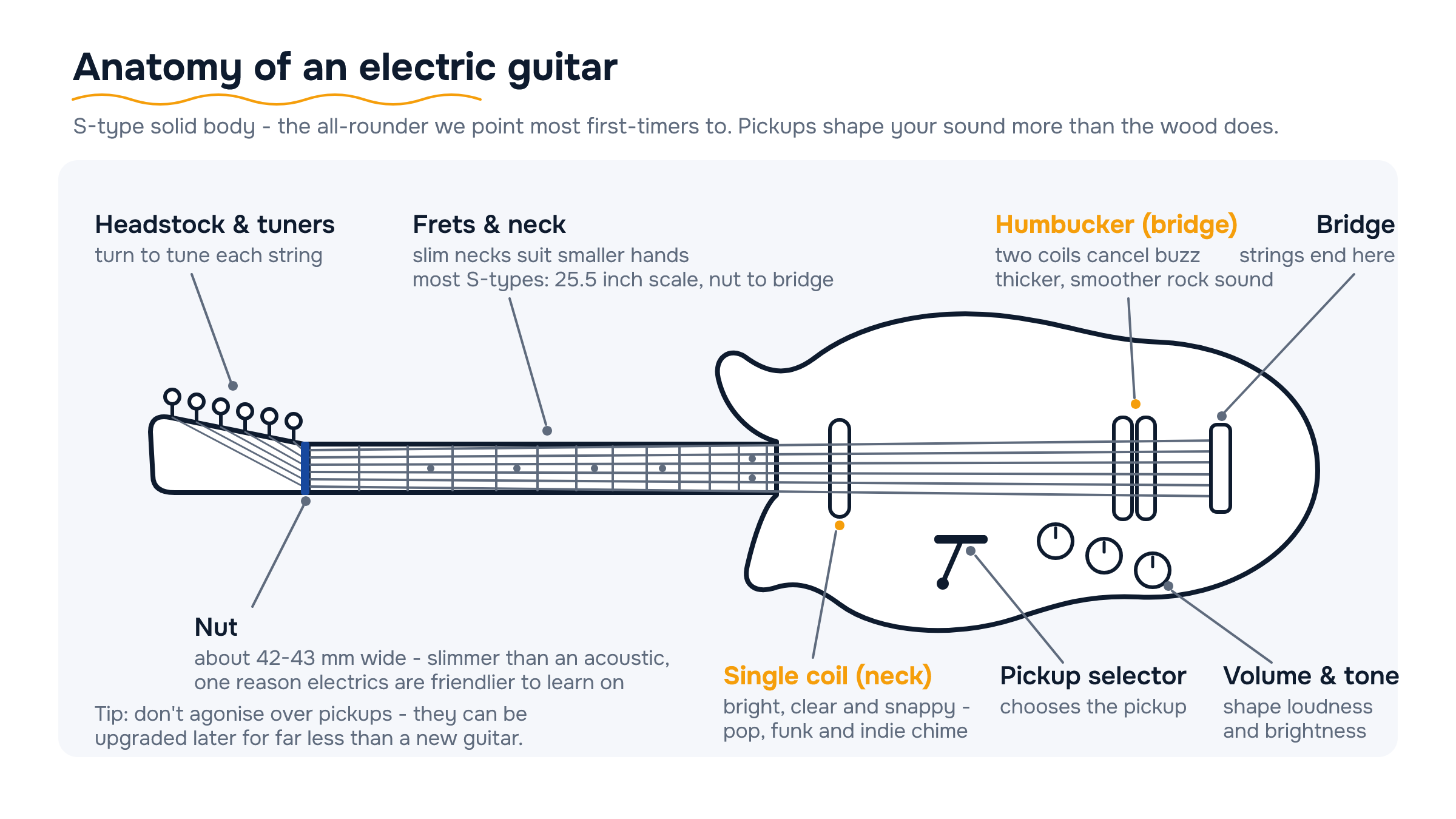
- S-type (Stratocaster-style). Double cutaway, contoured body, light on the shoulder. Usually three single coil pickups or a humbucker-plus-singles mix, so it covers pop, indie, blues, funk and classic rock without breaking a sweat. The Ibanez GIO range and plenty of others follow this template.
- LP-type (Les Paul-style). Single cutaway, thicker body, usually two humbuckers and a fixed bridge. The sound is warmer and fatter with more sustain — the classic rock voice. Epiphone's Les Paul models are the textbook example. They're heavier, which matters for smaller players.
- Hollow and semi-hollow. Bigger, resonant bodies for jazz, blues, rockabilly and indie jangle — think Ibanez Artcore. Gorgeous sounds, but they squeal with feedback under heavy distortion and the body size can swamp smaller frames.
For most beginners, an S-type solid body is the right call because it's light, comfortable and versatile enough that you won't outgrow the sound in a year. If the music you love is built on thick rock tones, start with an LP-type instead — buy towards the sound in your head. Browse the full range of electric guitars to see the shapes side by side.
Pickups: Single Coils vs Humbuckers
Pickups are the magnets under the strings that turn string vibration into signal, and they shape your sound more than the wood does.
- Single coils sound bright, clear and snappy. They're the chime in pop, funk, country and indie, and they keep clean chords sparkling. The trade-off: they can buzz quietly near bright lights and under heavy distortion.
- Humbuckers are two coils working together, which cancels that buzz (hence the name) and gives a thicker, louder, smoother sound. They're the engine of rock, blues and metal.
Plenty of beginner guitars hedge the bet with an HSS layout — a humbucker at the bridge for rock sounds, two single coils for everything else. If you genuinely don't know what you'll play yet, that's the sensible pick.
Don't agonise over this one. Think about the records you actually listen to and match the pickup to them. And remember pickups can be upgraded later for far less than the cost of a new guitar, so a body and neck you love is worth more than the perfect pickup set on day one.
Necks, Scale Length and Hand Size
Scale length is the distance from the nut to the bridge, and it quietly decides how a guitar feels. Most S-types run a 25.5 inch scale; LP-types run 24.75 inches. The shorter scale puts frets slightly closer together and makes the strings feel a touch slinkier — handy for smaller hands and easier bends.
Neck shape matters just as much. Slim, flat profiles (Ibanez calls theirs Wizard necks) suit fast players and smaller hands; rounder profiles fill the palm and suit chord strummers. Nut width on most electrics sits around 42-43mm — noticeably slimmer than an acoustic, which is one reason electrics are friendlier to learn on.
For kids:
- Around 6-10 years old: a three-quarter size, short-scale electric (roughly 22 inch scale, like Ibanez's miKro models) is the honest choice. A full-size guitar at this age means sore hands and short practice sessions.
- Around 11 and up: most kids manage a full-size electric, especially an S-type with a slim neck. Lighter is better.
If you're between sizes, come in and let them hold both — five minutes with a guitar in their lap answers the question better than any chart.
Why Setup Beats Brand at Entry Level
Here's the thing nobody tells first-time buyers: at the entry level, how a guitar is adjusted matters more than whose name is on the headstock. The setup — string height, neck relief, intonation, smooth fret ends — is the difference between a guitar that feels easy and one that fights you.
A well set up guitar from the $300-$600 bracket will play better than a dearer one that's gone straight from a shipping box to a wall hook. High string action makes every chord harder than it needs to be, and beginners almost always blame their fingers instead of the guitar.
This is why buying from a shop with real players behind the counter pays off. Our Footscray workshop does restrings and setups in-store — a restring is $55 plus the cost of strings, fitted with a clean included — so your guitar can play at its best from the first lesson, and again every time it needs fresh strings.
What Else You Need on Day One
An electric guitar on its own is very quiet. Budget for the full kit from the start so the first week is about playing, not waiting on missing parts.
- Amp. A 10-20 watt practice combo with a headphone jack is ideal — big enough to sound exciting, small enough for a bedroom, and the headphone jack keeps the household onside. Browse guitar amps, or read our guitar amp buying guide for the full rundown.
- Cable. One decent 3 metre instrument cable. The freebie cables in some bundles are usually the first thing to fail.
- Tuner. A clip-on tuner lives on the headstock and works anywhere. Non-negotiable — a guitar in tune is the difference between practising and giving up.
- Picks. A handful in the 0.60-0.73mm range to start. They're cheap, and they vanish.
- Strap and stand. A strap for playing standing up, and a stand (Hercules make sturdy ones) so the guitar lives in view — guitars on stands get played, guitars in cases don't.
- Spare strings. A set of 9s (.009-.042) is the standard light gauge for beginners — D'Addario and Ernie Ball both make them. Our guitar strings guide explains gauges in two minutes.
Everything above lives in parts and accessories, and orders over $150 ship free Australia-wide.
Beginner Packs, Separates and Left-Handers
Beginner packs bundle a guitar, small amp, cable, picks, strap and tuner into one box at a sharp price. For budgets under about $400, or for parents who'd rather make one decision than six, they're genuinely good value — our Beginner's Packs range covers the popular options.
Above that budget, separates win. Pack amps are built to a price, and the amp shapes your sound as much as the guitar does. Putting $300-$500 into the guitar and choosing the amp yourself usually gets a noticeably better rig for similar money.
If you or your child is left-handed, buy a proper left-handed guitar — flipping a right-handed one over puts the strings, nut and controls in all the wrong places and makes learning harder. Check the Left Handed range, and call us on 03 4151 5751 to see which left-handed electrics are in — stock moves, and as an authorised Australian dealer we can usually order what you're after with full manufacturer warranty.
Still weighing it up? Come and play a few at 284-288 Ballarat Rd, Footscray — there's no substitute for getting a guitar in your hands, and there's always a player on the floor to help.
What your budget gets you
Under $300
Testing the waters, younger kids, or strict budgets.
Pack guitars and basic S-types — fine to learn on if the neck is straight and the fret ends are smooth. Factor in a setup to get it playing properly.
Shop Beginner's Packs under $300 →$300-$600
The sweet spot for most first electrics, teens and adults alike.
Name-brand entry ranges such as Ibanez GIO and Epiphone's starter models: reliable tuners, decent pickups and necks that hold their adjustment. This is where we point most first-timers.
Shop Electric $300–$600 →$600-$1,000
Committed starters and players upgrading from a pack guitar.
Better pickups, smoother fretwork and nicer hardware — a guitar that's still on stage with you years later. Afterpay and Zip can split it into four interest-free instalments.
Shop Electric $600–$1,000 →Around $1,000+
Second-instrument upgraders who know the sound they're chasing.
Serious builds from the likes of ESP LTD and Ibanez's upper ranges, with pro-level pickups and hardware. We price-match other authorised Australian dealers, so buy on feel, not postcode.
Shop Electric from $1,000 →Compare at a glance
| Type | Best for | Watch out for | Typical spend |
|---|---|---|---|
| S-type solid body | All-round first guitar: pop, indie, blues, funk, classic rock | Tremolo bridges can drift out of tune until they're set up | $300-$800 |
| LP-type solid body | Rock and heavier tones, players chasing thick sustain | Noticeably heavier on the shoulder for smaller players | $400-$1,000 |
| Semi-hollow / hollow | Jazz, blues, rockabilly and indie jangle | Feeds back under high gain; big body suits bigger frames | $500-$1,500+ |
| Three-quarter / short scale | Kids roughly 6-10 and smaller hands | Gets outgrown in a few years; still deserves a proper setup | Under $300 |
Common mistakes to avoid
- Buying on looks alone Looks keep you motivated, but the neck decides whether the guitar actually gets played. Hold it before you buy if you can — or tell us the player's age and hand size and we'll shortlist for you.
- Leaving no budget for the amp A $500 guitar with no amp is a silent $500 guitar. Set aside money for the amp, cable and tuner from the very start.
- Flipping a right-handed guitar for a left-hander The strings, nut and controls all end up in the wrong places, which makes learning harder. Genuine left-handed beginner electrics exist and don't cost much more.
- Going full-size too early A full-size electric on a seven-year-old means sore hands and five-minute practice sessions. Three-quarter short-scale models exist for exactly this reason.
- Blaming your fingers when the guitar needs a setup High string action makes any guitar hard work, and beginners always assume it's them. If chords hurt more than they should, a setup is far cheaper than giving up.
Your questions, answered
Do I need an amp straight away?
Yes — an unplugged electric is whisper-quiet and not much fun to practise on. A small 10-20 watt practice amp with a headphone jack will cover the first couple of years easily. If noise is the worry, headphone practice amps let you play in full silence.
Is an electric easier to learn on than an acoustic?
For most people, yes. Electric strings are lighter, the action is lower and the neck is slimmer, so chords hurt less in the first month. That said, the best first guitar is the one that matches the music you actually want to play — motivation beats everything.
What size electric guitar does my child need?
As a rule of thumb, kids around 6 to 10 do best on a three-quarter size short-scale electric, and most kids 11 and up can handle full size. Height and hand size matter more than age, so if you're unsure, bring them into the Footscray store and we'll size them up in minutes.
Are beginner packs worth it?
Under about $400, yes — everything arrives in one box and it all works together, which is exactly what most parents want. Above that, buying the guitar and amp separately gets you noticeably better gear for similar money.
What does a setup actually involve?
Adjusting the neck relief, string height and intonation, and checking the frets, so the guitar plays in tune and feels easy all the way up the neck. It transforms cheaper guitars in particular. Ask about it in-store — we do restrings and setups in our Footscray workshop.
Can I order online instead of visiting the store?
Absolutely. Shipping is free Australia-wide over $150, tracked and insured, with same-day dispatch on weekday orders before 2pm AEST. You're covered by 30-day returns, or choose Click and Collect and pick it up from the Footscray showroom.
Why does my new guitar keep going out of tune?
Usually it's not the guitar — new strings stretch for the first few days, and an unset-up tremolo bridge makes it worse. Stretch the strings in, give it a week, and a setup will sort the rest. If it still won't hold tune after that, it's worth getting it looked at.
Shop the categories in this guide
Keep reading: How to Choose a Guitar Amp · How to Choose Guitar Strings · How to Choose Guitar Pedals
Try our in-store range in Footscray
Come and play what we’ve got on the floor side by side — real players on hand, honest advice, and genuine authorised Australian stock with full manufacturer warranty. Call ahead and we’ll check what’s in store for you to try.
Talk to our experts — in-store or on the phone
Still torn between two? Our team are real players who know this gear inside out. Call us, message us, or drop in and play what we’ve got in store. Reserve online for Click & Collect — we’ll confirm it’s ready before you come in — genuine stock, full manufacturer warranty, and your Consumer Law rights always apply.
Visit the Footscray showroom
Why you can trust this advice
Written & reviewed by
The Scarlett Music Team
Footscray showroom & workshop · Independent dealer since 1997
This guide is written by the same team that sells, demos and plays this gear six days a week — so our picks come from hands-on experience with the actual instruments, not a spec sheet. We only recommend genuine, authorised Australian stock, and pricing and availability are reviewed and updated regularly.




Leave a comment