How to Choose a Bass Guitar
Four strings or five, short scale or long, P or J? The bass players at our Footscray store explain every choice in plain English — and the amp to match.
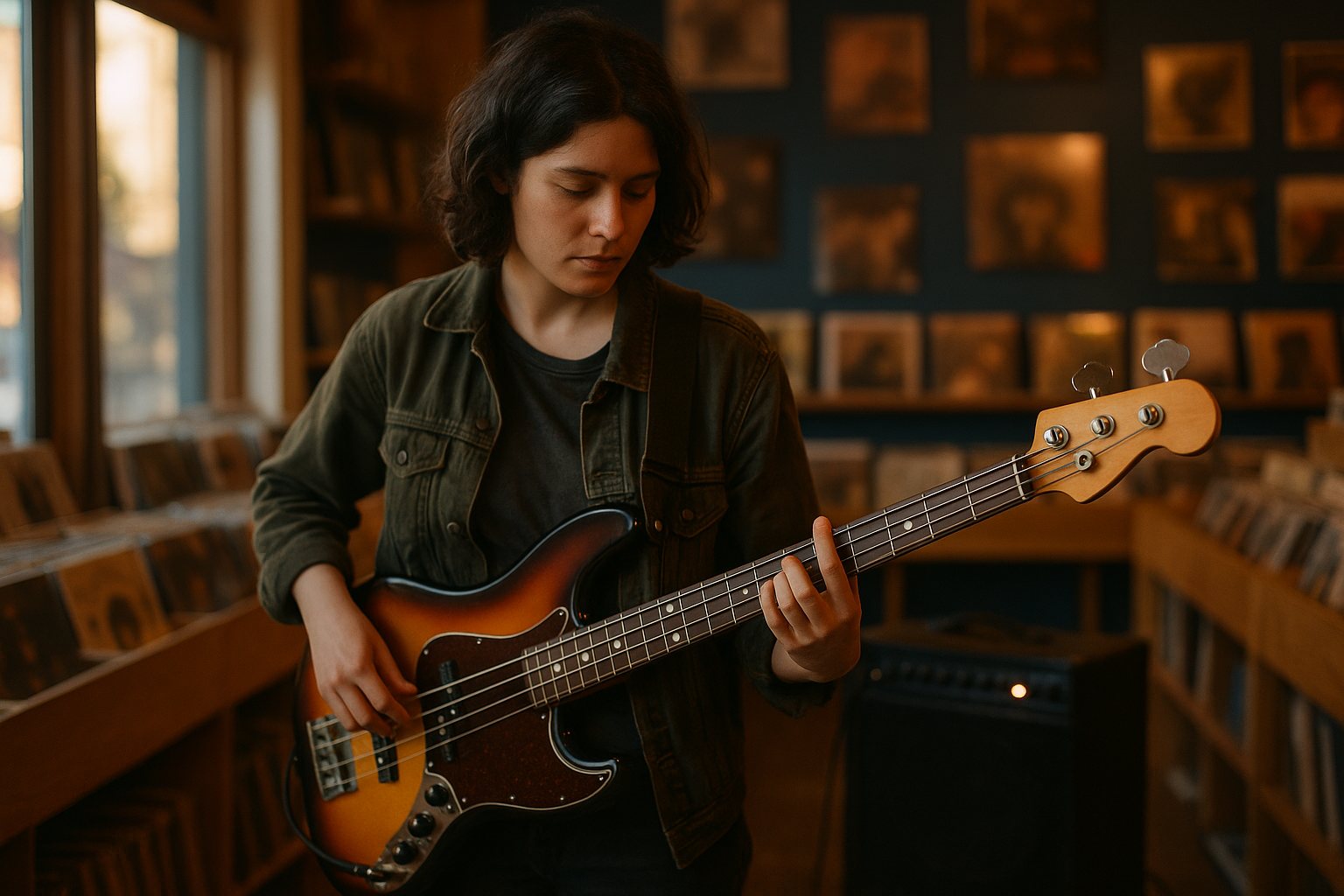
Bass is the best seat in the band. Whether you're picking up your first instrument, you're a guitarist who keeps getting asked to cover bass, or you're a parent kitting out a school jazz band player, the decisions are the same: how many strings, what size, what pickups, and what amp to put under it.
We've sold and played bass at our Footscray store since 1997, and the same handful of questions settle almost every purchase. This guide answers them in plain English so you can buy once and buy right.
Four Strings or Five?
Start on four. A 4-string covers almost everything — rock, pop, blues, Motown, school jazz band charts — and the slimmer neck is far friendlier on a learner's fretting hand. Strings cost less to replace, and there's a much bigger range of basses to choose from at every budget.
A 5-string adds a low B below the usual E string. That matters if you play modern metal, worship music or anything written around drop tunings — you get those low notes without retuning. The trade-offs are a wider neck, tighter string spacing and a heavier instrument.
- Choose 4 strings if you're new to bass, buying for a school-age player, or covering classic rock and pop.
- Choose 5 strings if your music regularly drops below low E — metal, gospel, and a lot of current worship and pop production.
Don't buy a 5-string "to be safe". If you're not actually using the low B, the extra string just adds muting work while you learn — and muting is half of bass technique.
Scale Length and Smaller Players
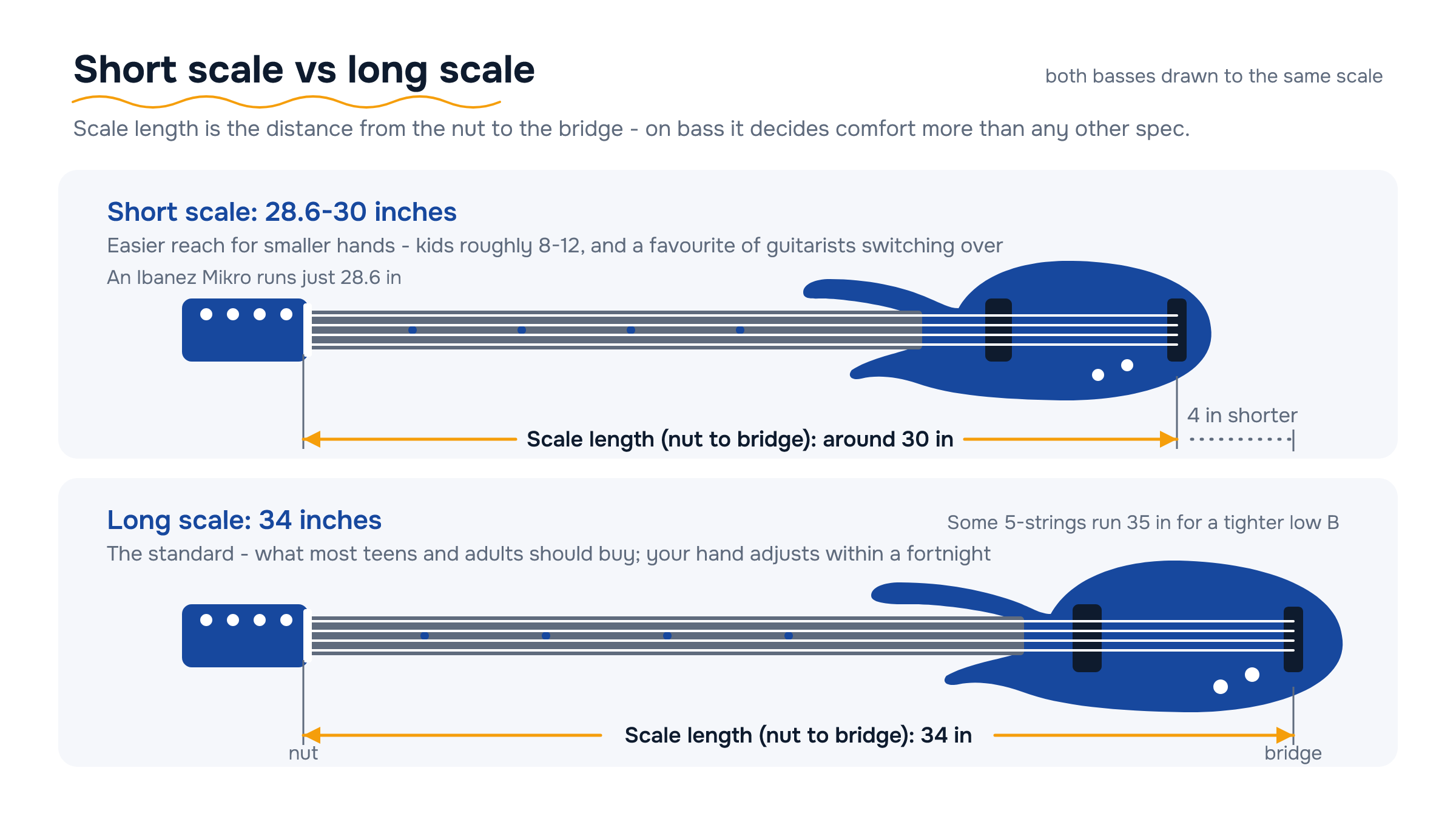
Scale length is the distance from the nut to the bridge, and on bass it decides comfort more than any other spec. Standard "long scale" is 34 inches — that's what most basses are, and what most teens and adults should buy. The first-position stretches feel big for the first fortnight, then your hand adjusts.
Short-scale basses run around 28.6 to 30 inches. Something like an Ibanez Mikro at 28.6 inches shrinks every fret distance, drops the weight, and makes bass genuinely playable for kids of roughly 8 to 12 and adults with smaller hands. Short scales also sound a touch warmer and thumpier — plenty of professionals gig them by choice, so it's not a "kids' bass" compromise.
- Roughly ages 8-12 or small hands: short scale, 28.6-30 inches.
- Teens and adults: standard 34 inches — you'll grow into it within weeks.
- 5-strings: some run 35 inches for a tighter-feeling low B; great tone, but more stretch and more weight.
Guitarists adding bass often love short scale too — the spacing feels closer to home, so the switch happens faster.
P-Style vs J-Style in Plain English
Most basses descend from two classic designs, and the difference is easy to hear.
P-style (Precision-style) has one split pickup in the middle of the body. The sound is fat, warm and solid — the low end that has anchored more records than any other instrument. One volume, one tone, no decisions. If you want a sound that simply works in every band, this is it.
J-style (Jazz-style) has two narrow single-coil pickups. Blend towards the bridge pickup for a brighter, growlier tone that suits fingerstyle and funk; blend towards the neck and it rounds out. J necks are usually slimmer at the nut, which many beginners find easier to fret.
PJ basses put a P pickup at the neck and a J pickup at the bridge. You'll find this layout across Ibanez and ESP LTD ranges, and it's our usual recommendation for a first bass — both classic flavours in one instrument.
- One reliable, classic sound: P-style.
- More tonal variety and a slimmer neck: J-style.
- Can't decide: PJ — genuinely the best of both.
Active or Passive Electronics?
Passive basses send the pickup signal straight to the amp. The tone control only rolls treble off, the sound is classic and dynamic, and there's nothing to go flat mid-song. Simple is a feature here — most of the records you know were made on passive basses.
Active basses add a battery-powered preamp with EQ on the instrument — usually bass and treble, sometimes mids as well — so you can boost or cut your tone without touching the amp. The result is punchier and more modern, which suits slap, heavier rock and worship styles. Most Ibanez SR-series basses are active for exactly this reason.
- Go passive for simplicity, vintage tones and one less thing to think about — the right call for most first basses.
- Go active if you want modern punch and the ability to reshape your sound between songs from the bass itself.
If you buy active, keep a spare 9V battery in the gig bag and unplug the lead when you're not playing — the output jack acts as the power switch, and a dead battery means silence.
Pairing the Right Bass Amp
Bass needs an amp built for bass. A guitar amp's speaker isn't designed to move that much air, and pushing low frequencies through it at volume can damage it. Budget for a proper bass amp from day one.
Wattage runs higher on bass than guitar because low frequencies eat power. As a working rule, you need roughly three to four times the wattage of the guitarist next to you to sit at the same volume.
- Home practice: a 15-30 watt bass combo with an 8 or 10 inch speaker. A headphone output and an aux input for play-along tracks are the features that matter most for home use.
- School band and rehearsals with a drummer: 100 watts and up, ideally through a 12 or 15 inch speaker, with enough clean headroom that you're not flat out at band volume.
- Gigging: a 200-500 watt bass head into a cabinet, or a large combo with a DI output so the PA carries the room while your amp covers the stage.
For the deeper dive on combos versus heads and cabs, see our amp buying guide — the same logic applies to bass, just with more watts.
What Else You Need (and What Can Wait)
The good news: bass needs less supporting gear than guitar. Here's the honest list.
- A spare set of strings. Standard roundwounds in a 45-105 gauge set suit almost everyone; flatwounds give you that thumpy old-school Motown feel and last for years. We stock D'Addario and Ernie Ball sets in our bass guitar strings range.
- A wide, padded strap. Basses commonly weigh 4 kg or more, and a thin guitar strap digs in fast. This is the upgrade beginners thank us for.
- A clip-on tuner and a decent cable. Cheap cables fail at the worst moment; a tuner makes practice sound right from day one.
- A padded gig bag if the bass travels to school or rehearsal — bass necks are long levers and don't enjoy being knocked.
- A method book. The Hal Leonard bass methods are what we hand most beginners — browse our bass guitar books.
What can wait: pedals, a second pickup blend you'll never use, and the bigger amp — buy those when the music asks for them. When your strings die, our in-store restring service is $55 plus the cost of strings, fitted with a clean included — book a restring.
Still tossing up between two basses? Call us on 03 4151 5751 or drop into the Footscray showroom at 284-288 Ballarat Rd and play them back to back — it's the fastest way to know.
What your budget gets you
Under $400
First bass for a beginner or a school player — this is where most people rightly start.
Look for a 4-string with a straight neck, tidy fret ends and tuners that hold pitch; PJ pickups are a bonus at this level. Leave room in the budget for a strap, cable and tuner.
Shop Bass under $400 →$400-$800
The serious-beginner sweet spot, and where guitarists adding bass should shop.
Noticeably better necks, pickups and hardware — Ibanez GSR and Talman territory. A bass from this band will happily survive into first gigs and recording.
Shop Bass $400–$800 →$800-$1,500
Committed players, and anyone gigging or recording regularly.
Active EQ, lighter bodies, better bridges and smoother fretwork — think Ibanez SR and ESP LTD ranges. Expect an instrument you won't outgrow.
Shop Bass $800–$1,500 →Around $1,500+
Players chasing a specific sound, a specific neck feel or a premium build.
Premium timbers, top-shelf pickups and pro-grade hardware. Up here it's about preference rather than quality jumps, so play before you buy whenever you can.
Shop Bass from $1,500 →Compare at a glance
| Type | Best for | Watch out for | Typical spend |
|---|---|---|---|
| 4-string, 34 inch scale | Almost everyone — rock, pop, school band, first basses | First-position stretches feel big for the first couple of weeks | $300-$1,500 |
| Short scale (28.6-30 inch) | Kids around 8-12, smaller hands, guitarists switching over | Smaller range to choose from; slightly warmer, thumpier voice | $250-$800 |
| 5-string | Metal, worship and modern pop that lives below low E | Wider neck, more weight and extra muting work for beginners | $500-$1,500+ |
| P-style | One fat, reliable sound that sits in any mix | Limited tonal variety — one pickup, one tone control | $300-$1,200 |
| J-style / PJ | Tonal flexibility with a slimmer, faster neck | Single-coil pickups can hum near lights and screens when soloed | $350-$1,500 |
| Active bass | Punchy modern tone with EQ on the instrument | Runs on a 9V battery — a dead one means silence mid-song | $500-$1,500+ |
Common mistakes to avoid
- Playing bass through a guitar amp Guitar speakers aren't built to move bass-level air and can be damaged once you turn up. A small dedicated bass combo costs less than a speaker repair.
- Buying a 5-string "just in case" If you're not actually using the low B, the fifth string only adds muting work while you learn. Start on four and trade up later if your music demands it.
- Putting a full-size bass on a small player A 34 inch scale on an eight-year-old leads to sore hands and bad habits. Short scale isn't a toy — it's the right tool for the job.
- Forgetting the extras in the budget A strap, cable, tuner and padded gig bag add a real chunk to the bill. Leave room for them, or the bass ends up parked in the corner.
- Judging a bass by its out-of-the-box setup String height and intonation are adjustable, and factory setups are often conservative. Don't write off an otherwise great instrument over things a setup fixes.
Your questions, answered
Is bass easier to learn than guitar?
Different rather than easier. You mostly play one note at a time, so early progress feels fast — most beginners are playing recognisable basslines within a couple of weeks. But good bass is about timing, feel and locking in with a drummer, and that takes the same steady practice as any instrument.
Can I plug a bass into my guitar amp?
At quiet bedroom volume you'll get away with it briefly, but guitar speakers aren't designed for bass frequencies and can be damaged once you turn up. Small bass combos are inexpensive, and the headphone output makes them a better practice tool anyway.
What size bass should I buy for my child?
For roughly ages 8 to 12, a short-scale bass around 28.6 inches — something like an Ibanez Mikro — is the right call. Most teenagers are comfortable on a full 34 inch scale. If you're unsure, bring them into the Footscray store and we'll size them up in person.
Do I need an amp straight away?
You'll want one within the first week — an unplugged electric bass is too quiet to practise musically. A 15 to 30 watt practice combo with a headphone output covers home playing for years. If the budget is tight, a solid bass plus a small amp beats a flashier bass with no amp every time.
Should I get a 4-string or 5-string for school jazz band?
Four. School charts almost never go below low E, and the narrower neck makes walking lines and sight reading easier. If the program moves into contemporary arrangements that genuinely need a low B, that's the moment to revisit.
How often do bass strings need changing?
Far less often than guitar strings. Roundwounds keep their brightness for three to six months of regular playing, and flatwounds can sound great for years. When it's time, our in-store restring service is $55 plus the cost of strings, fitted with a clean included.
Can I order online and pick the bass up in store?
Yes — Click & Collect from the Footscray showroom is available, or we ship Australia-wide with free shipping over $150, tracked and insured. Weekday orders before 2pm AEST are dispatched the same day, and Afterpay and Zip are available if you'd rather pay in instalments.
Shop the categories in this guide
Keep reading: Guitar & Bass Amp Buying Guide · Guitar Strings Buying Guide · Electric Guitar Buying Guide
Try our in-store range in Footscray
Come and play what we’ve got on the floor side by side — real players on hand, honest advice, and genuine authorised Australian stock with full manufacturer warranty. Call ahead and we’ll check what’s in store for you to try.
Talk to our experts — in-store or on the phone
Still torn between two? Our team are real players who know this gear inside out. Call us, message us, or drop in and play what we’ve got in store. Reserve online for Click & Collect — we’ll confirm it’s ready before you come in — genuine stock, full manufacturer warranty, and your Consumer Law rights always apply.
Visit the Footscray showroom
Why you can trust this advice
Written & reviewed by
The Scarlett Music Team
Footscray showroom & workshop · Independent dealer since 1997
This guide is written by the same team that sells, demos and plays this gear six days a week — so our picks come from hands-on experience with the actual instruments, not a spec sheet. We only recommend genuine, authorised Australian stock, and pricing and availability are reviewed and updated regularly.



Leave a comment